
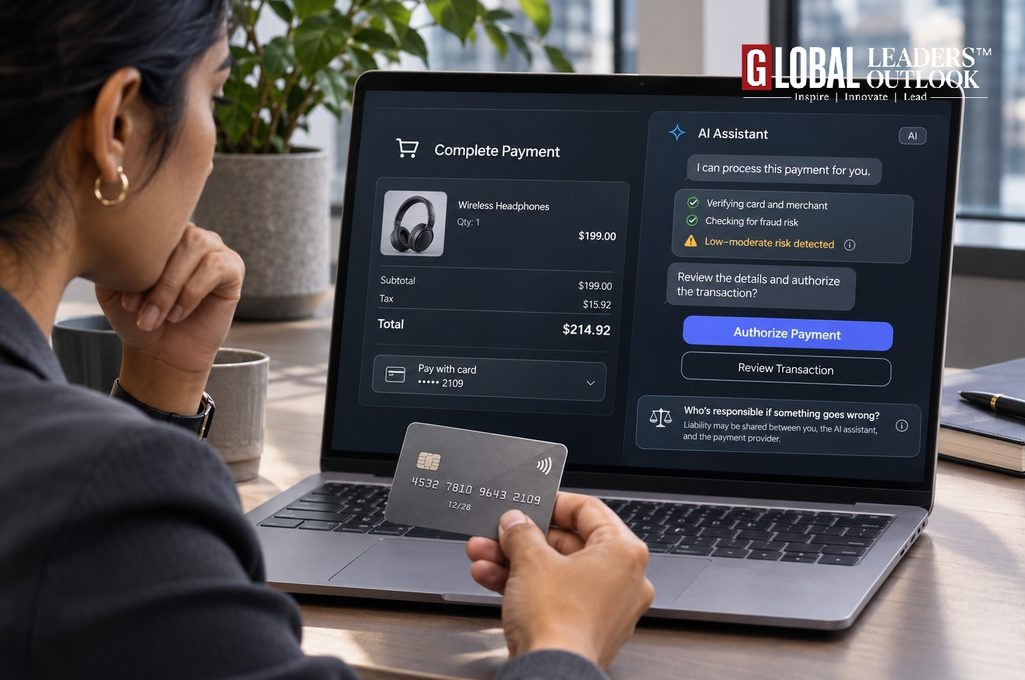
Payment networks are developing ways to authenticate AI agents and authorize their purchases, but responsibility for errors remains unclear. Startups that can verify customer intent may find an opportunity in the gap.
American Express has promised to cover customers when an AI agent buys the wrong thing, but its conditions show how unsettled the question remains. Announced in April, the protection applies only to registered agents that send the cardholder’s authenticated purchase intent. Amex describes it as a future benefit subject to terms and conditions. Visa and Mastercard have not announced a comparable commitment. For companies building products and services around agent-led commerce, the central question is who absorbs the loss when an agent misreads its instructions.
The liability gap in agent-led commerce
Card payments were designed around a person who chooses a product, authenticates the purchase and, if something goes wrong, disputes the charge. An AI agent acts on that person’s behalf but it can interpret instructions and complete purchases without the customer reviewing every step.
Adobe reported that retail visitors referred by AI services converted 54% better than other visitors in May. However, the figure measures visitors arriving through AI referrals, not purchases independently completed by agents. It also does not establish that AI referrals caused the higher conversion rate. The distinction matters because agent-led purchasing introduces a different commercial and legal problem, which is determining whether an automated transaction reflects the customer’s actual instructions.
When authorization fails to capture intent
A conventional card dispute generally concerns whether a cardholder authorized a transaction or whether a merchant delivered what was promised. Agent-led purchases introduced another question: did the agent follow the customer’s instructions?
Consider a hypothetical purchasing agent that orders a year’s supply of a part when its owner wanted one month’s. The account was valid, the limit held, and the merchant shipped what was ordered. A fraud claim fails because the owner delegated the authority. A claim that the goods were not as described fails because the description was accurate. The agent misread intent, and no existing dispute category records intent.
Visa’s April rules partly address this: analyses say the cardholder answers for an agent provider’s actions as if the cardholder made the purchase. That approach places responsibility on the person delegating authority, but it does not say how to treat an agent that departed from its instructions. The distinction between permission to transact and permission to make a particular purchase remains important.
Why payment networks disagree on agent liability
The positions conflict because each party is built differently. Amex acts as issuer, network, and acquirer, so it can decide alone to absorb agent errors. Visa and Mastercard operate through thousands of separate banks, and a payments analysis argues that a shared guarantee would require those banks to agree on who pays.
Merchants at the end of that chain often absorb losses they cannot dispute, some analysts say. OpenAI moved purchases out of ChatGPT and onto retailers’ own checkout pages in March, and trade reports cited fraud prevention and disputes among its reasons. The shift illustrates a practical challenge that when the parties processing a transaction cannot establish who bears the risk, merchants may be left managing the consequences.
The case for verifiable intent in AI commerce
In March, Mastercard published an open specification, Verifiable Intent, that links a consumer’s identity, an agent’s instructions, and the outcome of a purchase into one tamper-resistant record available in disputes. Its documentation states the limit: it excludes dispute resolution and calls dispute liability ambiguous. A record of what the person authorized can show whether an agent stayed within its instructions, but it cannot say who pays when the agent did. If a network-assigned agent errs to a defined party, records like this would move from useful background to decisive evidence.
The startup opportunity in agent commerce
Payment networks can identify AI agents and approve their transactions, but merchants still need proof of what buyers instructed them to purchase. When an order is disputed, the buyer’s original request can establish whether the agent acted within its authority. A merchant that stores this instruction alongside the order can show that the buyer approved one month’s supply.
Without that record, the merchant may have a valid transaction but no evidence that the buyer wanted that quantity. Companies using agents to reorder supplies face similar risks, as disputed purchases can leave them responsible for the cost. Startups can address this gap by recording buyer instructions, verifying agent identities and maintaining transaction logs.
Their success will depend on whether banks and payment networks accept these records as evidence when purchases are challenged. Paying is the part of agent commerce that has mostly been built. What remains is an argument about intent, and arguments are settled by whoever can produce the record. Until a network writes a rule, the merchant, bank or startup holding the buyer’s original instruction has the strongest hand in any dispute over an agent’s order.