
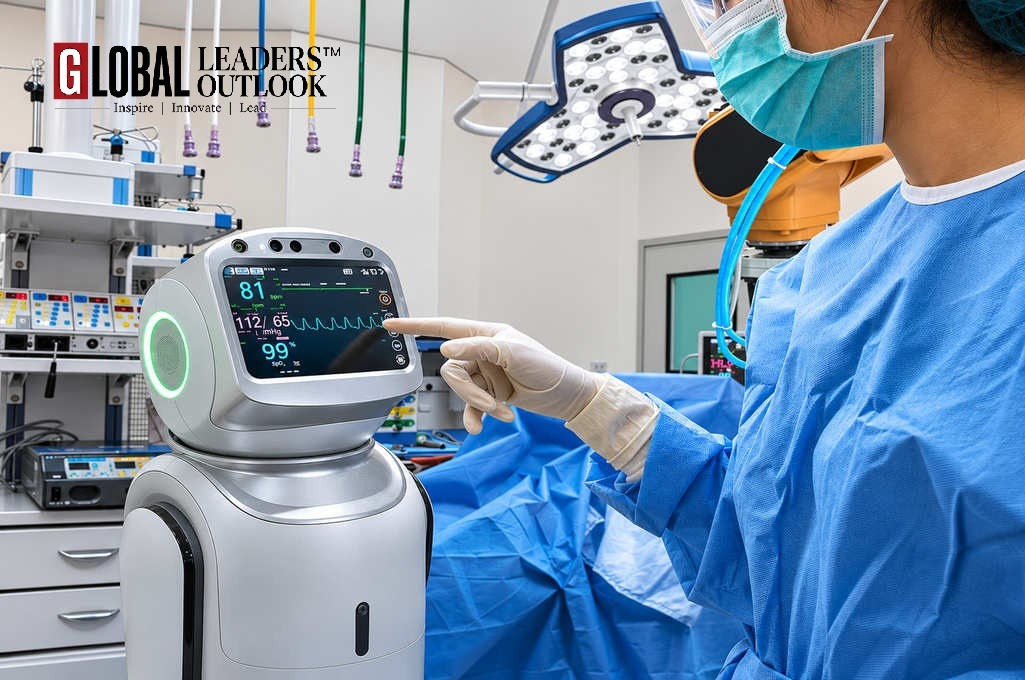
As surgical robots expand into general procedures, clinical evidence, surgeon experience and per-operation costs will determine where hospitals invest.
Medtronic said Tuesday that the U.S. Food and Drug Administration has cleared its Hugo robotic surgery system for general surgery, including gallbladder removal, gastric bypass and hernia repair. The clearance matters beyond one company. It shows surgical robots moving out of specialty procedures and into everyday operations, which changes how surgeons work, what patients can expect, how manufacturers compete and how hospitals spend their money.
How robotics is reshaping surgical practice
Robots are letting surgeons do through small cuts what they might otherwise do through a large one. In most abdominal operations, surgeons already use long hand-held tools through small cuts, a method called laparoscopy. A robotic system keeps those small cuts, but the surgeon sits at a console and steers the tools with hand controls and a sharper view.
The technology does not operate independently. Surgeons direct every movement, making their training and experience central to the quality of the procedure.
A JAMA Surgery study published in September followed 1,828 gallbladder patients at eight hospitals in one health system. Surgeons had to switch to open surgery, which means a large cut, in 0.5% of robotic cases and 3.4% of laparoscopic ones.
The findings suggest robotic assistance may help surgeons complete certain difficult operations without resorting to open surgery. In the same study, major complications occurred in 3.1% of robotic cases and 6.1% of laparoscopic ones. Patients undergoing robotic procedures also left the hospital about 0.8 days sooner on average.
Clinical outcomes: gains and unresolved questions
That change reached patients in measurable ways. In the same study, major complications occurred in 3.1% of robotic cases and 6.1% of laparoscopic ones, and patients left the hospital about 0.8 days sooner on average. The gains were concentrated in technically difficult operations and in patients with a higher body mass index, a measure of weight relative to height.
Patients were not randomly assigned to the robot, so the study cannot show that it caused the better results. All 14 surgeons were also skilled in both methods, so the findings may not apply to surgeons who use robots less often.
A national study shows why that caution matters. It analyzed Medicare data for 2020 through 2023 and found that injuries to the bile duct needing repair occurred in 0.38% of robotic gallbladder removals and 0.18% of laparoscopic ones. The first study tracked experienced surgeons in one health system, while this one cover surgeons across the country, including some still learning the robot. Its authors said the gap may reflect that learning curve, so results appear to depend on the surgeon as much as the machine.
Market competition and the repricing of robotic surgery
Whether the robot pays off becomes more urgent as the market opens. Medtronic's Hugo entered the U.S. in December 2025 for urology, which made it the first large device maker to offer a rival soft-tissue robot since Intuitive Surgical introduced da Vinci in 2000, according to the trade publication MD+DI, which describes that system as long dominant in the field. Two other large medical device companies have since won U.S. authorization or signed distribution deals for general-surgery robots.
Competition matters because a robot is not a single purchase. Instruments and supplies are billed for every operation, and in the September study that added about $2,200 to $2,400 per robotic case, even in easier cases in leaner patients where outcomes did not differ. For instance, Intuitive told investors on Oct. 20 that it had finalized price cuts on instruments for high-volume operations for non-cancerous conditions, expected to lower instrument revenue per procedure by 3% to 5%. The company said the aim is to widen use where cost holds hospitals back.
Intuitive also reported that 160 of the 546 systems it placed in the third quarter were leased on usage-based terms, up from 115 a year earlier. By linking payments to utilization, these arrangements can reduce the upfront investment required from hospitals, although they still leave providers with recurring costs.
Implications for hospital investment decisions
A hospital no longer decides only whether to buy a robot. It decides which operations to assign to it, because each robotic case costs more and the evidence suggests the benefit is largest in hard cases. Access is part of the same decision, because emergency patients in the September study less often received the robot when equipment was not available. Hospitals also need to track switches to open surgery, complications and cost by operation type and surgeon, so that spending follows evidence instead of habit.
Lower prices from more competitors would reduce what the robot costs, but they would not show where it helps. Hospitals that measure their own results can use robots where they improve care and avoid them where they do not. Those that do not will pay the per-case premium without knowing what it buys for patients.