As floods, droughts, and storms displace communities, portable school records and fair recognition of learning can help children continue their education without starting over.
For generations, schooling has been tied to a place: a desk, a district, a national curriculum and a paper record kept in one office. That arrangement worked when families could expect to stay in one community long enough for their children to complete their education.
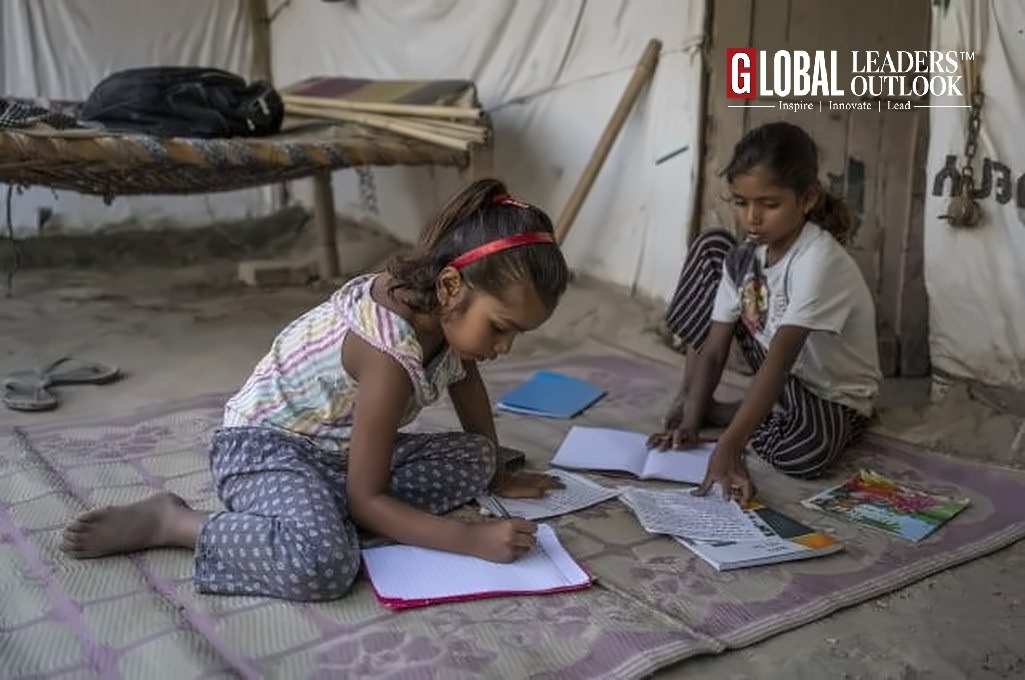
Climate change is making that assumption harder to sustain. Floods, storms, droughts and rising sea levels are forcing some families to leave their homes, sometimes with little time to prepare. When children arrive in a new town or country, they may carry their schoolbooks and memories of what they have learned. What they may not have is a reliable way to prove how far they have progressed.
This creates a challenge that education systems can no longer afford to overlook: if a child has to move, how can their education move with them?
A wave of movement schools did not plan for
The scale of potential displacement is substantial. The World Bank’s 2021 Groundswell report estimated that climate change could drive up to 216 million people to move within their own countries by 2050 across six world regions under pessimistic scenarios. The projection was lower under scenarios involving reduced emissions and more inclusive development. The Internal Displacement Monitoring Centre has also reported tens of millions of disaster-related displacements in recent years, a large share linked to floods, storms and other weather hazards.
Much climate-related movement is expected to occur within national borders. A family may move from a flood-prone district to a city, or from a drought-affected rural community to another region in search of work and stability. Others may cross national borders, including people from small island states or communities affected by changes to shared river basins.
For children, the disruption does not depend on whether a border is crossed. Even within one country, differences in curricula, languages, examination schedules and enrolment rules can make a transfer complicated. A child who has completed most of a school year may find that the new school does not recognize the subjects studied or the assessments already completed.
Making learning records travel
For a child who has moved, the hardest part of starting a new school is often proving what has already been learned. Report cards and exam results are usually kept in a single school office, and they can be lost or left behind when a family leaves in a hurry. Without them, a new school may place a child in a lower grade, ask for repeated tests or delay enrollment while documents are checked.
Portable records offer one way to ease this problem. A secure digital file of grades and completed courses could travel with the family, and recognition practices could help schools place students by what they know rather than by age alone. A student who leaves a flooded delta region in the middle of secondary school, for example, might avoid repeating a year if the new school accepts verified transcripts.
These solutions have limits, however. Digital records depend on electricity, internet access and devices that many schools and households still lack. They also need safeguards. A child’s educational history is personal information, and sharing it across institutions must not expose displaced families to privacy risks.
Faster paths for students, uneven support on arrival
Recognizing previous learning can help children spend less time waiting for enrollment or repeating coursework. For older students, it may also make it easier to continue toward examinations, university or vocational training.
But getting the paperwork right is only one part of the transition. A child may be placed in the correct grade and still struggle to follow lessons in a new language, adjust to a different curriculum or catch up after months away from school.
The schools receiving displaced students may also be under pressure. Classrooms could already be crowded, teachers stretched and support services limited. Additional language instruction, bridging courses and individual attention all require resources.
There is another concern worth considering. Standardized recognition frameworks can make transfers easier, but they must not overlook differences in local education systems. If designed without sufficient flexibility, they could give greater weight to education models used in wealthier countries while leaving less room for local languages, teaching traditions and community knowledge.
Local schools remain essential
For many children, the local school is more than a place to earn credits. It teaches in the language of the community, reflects local history and gives families a say in what is taught. For a child who has been through disruption, a familiar classroom can also provide routine, friendships and a sense of belonging that digital records cannot replace. Many experts therefore see portability as a support for local schools rather than a substitute, because a transferable record is most useful when there is a school ready to welcome the child who carries it.
A record that travels, a classroom that stays
The change underway is less about moving away from local education than about making sure a child’s learning is not lost when a family relocates. The scale of climate migration remains uncertain, and the need for portable records will likely differ from one region to another. The classroom stays local, even as the record of learning gains the means to travel.