
For generations, economic planning has relied on clear boundaries. Agriculture, mining, manufacturing, finance and telecommunications each have their own categories, making it easier to collect data, regulate businesses and direct investment.
Africa's creative economy is harder to fit into that structure. Music, film, fashion, design, gaming, publishing and digital content increasingly overlap with other industries, often within the same business. A fashion company can operate as a manufacturer, retailer, media business and licensing operation at the same time. A musician can generate income from recordings, performances, advertising and digital platforms. That has led some policymakers, investors and development institutions to question whether existing classifications still capture where value is actually being created.
The measurement problem is not unique to Africa, but it is particularly relevant to emerging creative markets. UN Trade and Development (UNCTAD) says the creative economy has no single definition, with countries using different classifications and methods to measure activities such as design, film, music, software and publishing. In its 2024 survey, creative activities accounted for between 0.5% and 7.3% of GDP and between 0.5% and 12.5% of the workforce in economies where comparable data was available. UNCTAD also cautioned that these figures are not directly comparable because countries differ in what they include and how they measure the sector.
Work that does not stay in one category
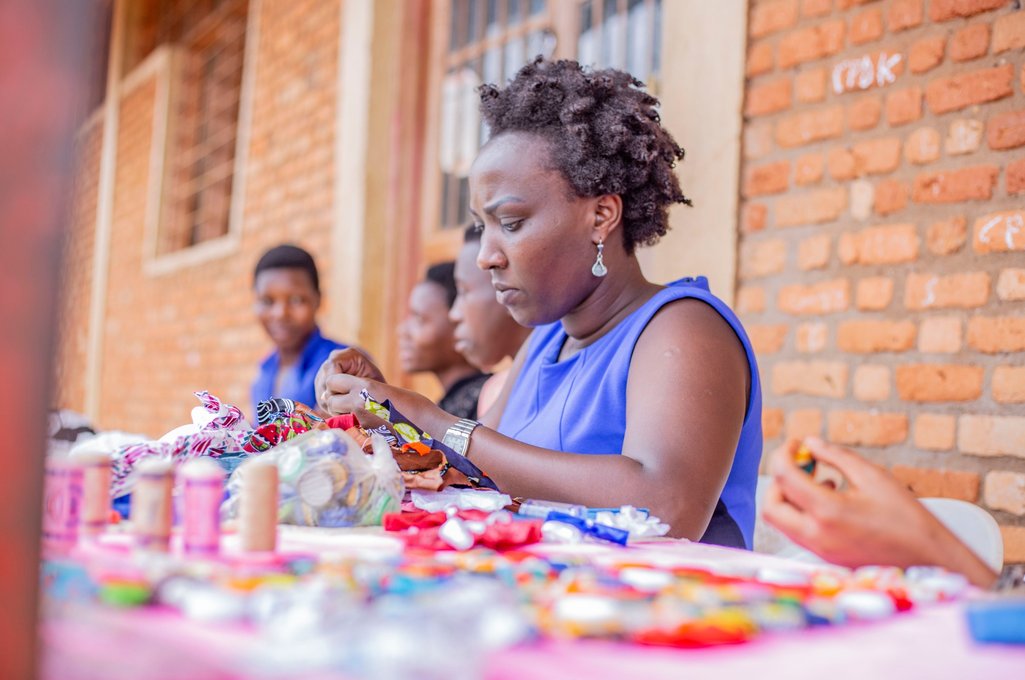
A fashion designer in Lagos might manufacture garments, sell through social media, license patterns and collaborate with musicians, all within one business. A producer in Nairobi or Johannesburg may earn from streaming royalties, live performances and brand partnerships, with each activity potentially recorded under a different category.
That fragmentation creates a statistical problem. Official data can capture the individual activities without necessarily capturing the business built around them. As a result, official statistics may capture only part of the value created, which helps explain why estimates of the creative economy's size vary between sources.
Some economists argue that informality, which is common across many African economies, means the sector's contribution to jobs and exports is being understated. But measurement gaps should not automatically be treated as evidence of a larger economic contribution. Others point out that media attention around successful artists and companies can make the sector appear larger than it is across the wider economy. The more useful question is not simply how large the creative economy is, but how consistently countries can identify, measure and compare its activities.
Better data is likely to be necessary before firm conclusions can be drawn.
Why the timing matters
Interest in the creative economy is growing as governments look for new sources of employment. Africa has a large and young population, yet formal jobs remain limited in some markets. At the same time, digital tools have lowered the cost of producing and distributing creative work, allowing musicians, filmmakers and designers to reach international audiences with less capital than before.
Lower barriers to entry, however, do not guarantee stable incomes. Revenue is often concentrated among a small number of artists and companies, while many creative workers face irregular pay, limited social protection and little influence over the terms set by global platforms.
That distinction matters for policymakers. A larger audience does not necessarily mean a larger pool of secure, well-paid jobs. The sector can expand commercially while leaving many of the people producing its content exposed to income volatility and weak bargaining power.
The potential economic scale is also becoming harder to ignore. In a July 2026 assessment, the International Finance Corporation said Africa's creative industries could contribute $200 billion in economic value and support 20 million jobs by 2030. The figures are projections of potential, not current economic output or employment.
What formal recognition can offer
A clearer definition of the sector could make support easier to design and measure. For creators, formal recognition may improve access to copyright protection, skills programmes and finance. A design studio with a valuable catalogue, for example, could have a stronger case for borrowing if its intellectual property is treated as an asset.
Governments and investors could also benefit from better data. Clearer definitions may make opportunities easier to assess and public spending easier to target. Creative exports could provide another source of foreign earnings for economies that rely heavily on a small number of commodities, but their contribution remains uneven across countries and should not be treated as a near-term replacement for established export sectors.
Recognition alone is unlikely to solve the sector's problems. Much depends on whether the support that follows is effective and whether it reaches informal workers as well as registered businesses.
There is also a practical question about what governments are actually trying to support. Tax incentives, copyright enforcement, training, export promotion, access to finance and digital infrastructure address different constraints. A broad definition of the creative economy will be useful only if it leads to policies that respond to those differences.
Where value can still slip away
Formal status would not remove structural obstacles. Weak copyright enforcement can allow piracy to persist, while conventional lenders may struggle to value intangible assets such as music catalogues, designs or brand equity.


.jpeg)