The partnership will focus on adapting Spinheat for resin coatings used on automotive and aerospace components.
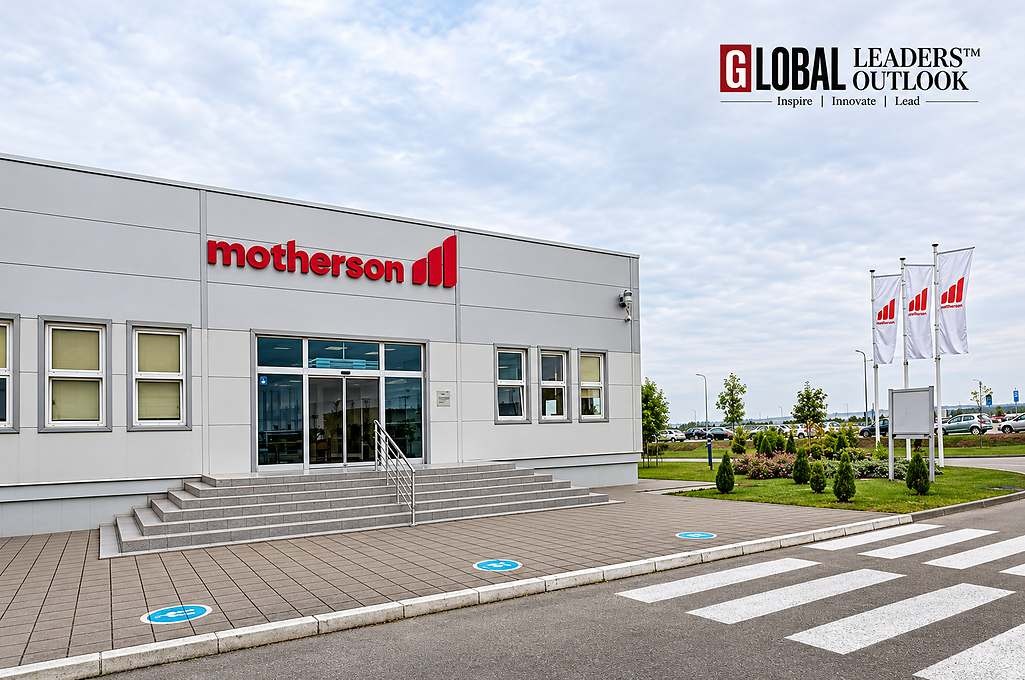
Samvardhana Motherson International Ltd. (NSE: MOTHERSON, BSE: 517334) said that its Singapore subsidiary, MSSL (S) Pte Ltd, has entered into a collaboration with Nanyang Technological University, Singapore (NTU Singapore) to develop and industrialize Spinheat, a magnetic induction curing technology.
The partners aim to adapt the technology for industrial use in resin coatings on automotive and aerospace components.
Nanoparticles turn a magnetic field into heat
Developed by NTU researchers, Spinheat uses magnetic nanoparticles embedded in coating materials such as adhesives and resins. When exposed to an alternating magnetic field, the particles generate heat inside the coating, triggering the curing process without requiring the entire component to be heated.
Lab results compare curing times
According to the company, Spinheat can cure industrial coatings in minutes with less energy than oven-based curing. Early lab results show it can match the bonding strength of conventional 24-hour oven curing in about an hour.
The method could also lower carbon dioxide emissions associated with the curing process, although the company did not provide quantified energy or emissions savings.
Partners split research and manufacturing roles
NTU brings expertise in magnetic materials and polymer science, while MSSL (S) provides manufacturing and engineering capabilities in automotive and non-automotive industries.
Dhruv Mehra, director of Motherson Singapore, said the partners will use Motherson’s proprietary SVAG E3 methodology to help translate the research into manufacturing applications.
The company did not disclose financial terms, the collaboration's duration, or a timeline.
NTU names reliability as next challenge
Terry Steele, an associate professor in NTU’s School of Materials Science and Engineering, said the next step is to understand how Spinheat can function reliably in automotive manufacturing.
The collaboration will allow researchers to access the technology against industrial materials, component geometries, and production requirements, Steele said.