Developers in Vietnam, Thailand, Malaysia and the Philippines are pursuing three different models to supply clean power. Their success will depend on whether they can deliver reliable electricity at competitive costs within evolving regulatory frameworks.
Industrial parks in Southeast Asia have long competed on location, transport links, utilities and access to workers. Electricity is becoming another differentiator as manufacturers weigh energy costs, supply reliability and emissions requirements when choosing where to operate. Developers are responding by adding solar generation, battery storage and power purchase agreements to their offering.
Akarin Prathuangsit, chief executive of WHA Utilities and Power (WHAUP), part of Thai developer WHA Group, said investing companies first ask whether supply is sufficient and how much green energy a park can provide. He said Vietnamese manufacturers, often cost-sensitive, increasingly add renewables to meet export and supply chain requirements.
The European Union’s carbon border mechanism entered its definitive phase on Jan. 1, 2026, the European Commission said. It prices emissions in imports such as steel, aluminum, cement and fertilizers, making emissions exposure relevant to manufacturers supplying those markets, although its direct scope does not cover every industrial tenant.
The response across Southeast Asia is not a single model. Some developers are arranging electricity sales directly to tenants, others are adding renewable generation to established industrial estates, while a third group is building parks designed to attract manufacturers of renewable energy equipment. Each approach faces a different combination of demand, infrastructure and regulatory constraints.
Parks start selling electricity under direct contracts
The first model makes the park a supplier. LEGO Manufacturing Vietnam signed a direct power purchase agreement, or DPPA, with the Vietnam–Singapore Industrial Park (VSIP) on Sept. 17, 2025. A DPPA lets a generator sell electricity to a large customer under a negotiated contract.
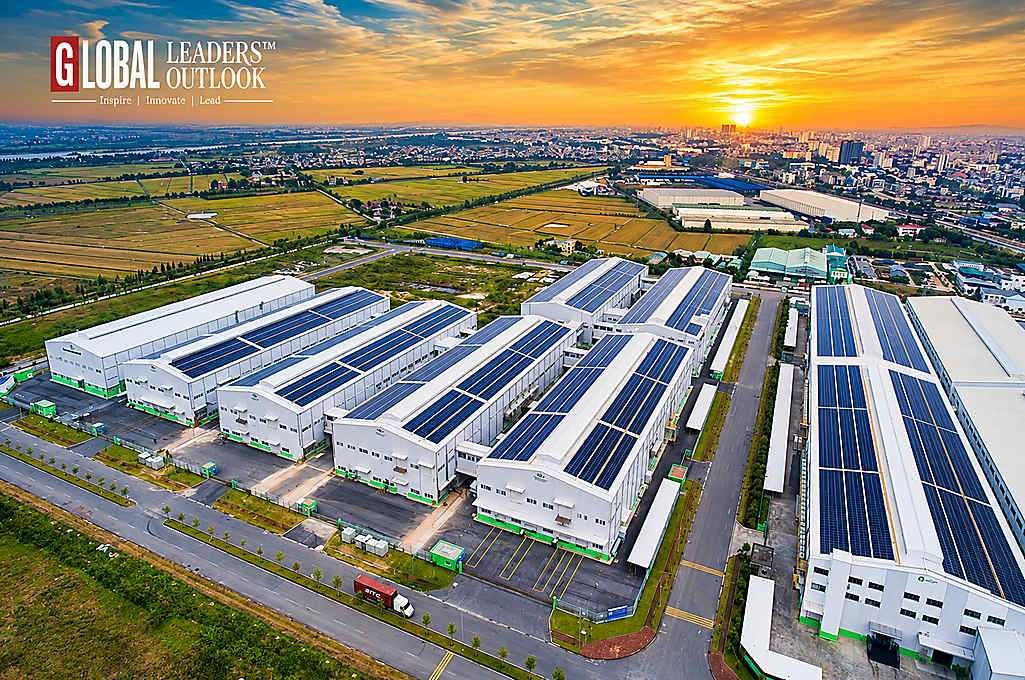
LEGO said solar power from VSIP would reach its $1 billion factory through battery storage and, with 12,400 rooftop panels, would cover about 75% of demand for the first five years. It said supply was expected to begin by early 2026 and that it uses renewable energy certificates, which are tradable records of renewable generation sold apart from the power, for demand not yet contracted.
Vietnam’s Decree 57, issued March 3, 2025, lets rooftop solar systems sell to large customers, according to law firm Norton Rose Fulbright. Tilleke & Gibbins said eligibility requires a minimum monthly consumption, currently 200,000 kilowatt-hours.
That threshold makes the arrangement more relevant to large industrial users than to smaller tenants. The model’s appeal depends on whether a park can connect renewable generation to a customer’s demand under commercially workable terms and deliver the contracted supply reliably. Battery storage can help manage when solar electricity is available, but it does not eliminate the need to consider the customer’s remaining demand and the role of the grid, therefore despite the new happenings, the grid isn’t going off soon.
Existing estates add solar but cover only part of demand
A second model retrofits established estates. Amata Corporation and B.Grimm Power are advancing a 1.2 billion baht floating solar project of up to 42.5 megawatt-peak at Amata City Chonburi, according to September 2026 reports. In 2023, WHAUP signed an 8-megawatt floating solar contract with Auto Alliance (Thailand) Co., a Ford and Mazda vehicle assembler, at WHA’s Eastern Seaboard estate in Rayong, Infoquest reported. The contract was designed to lower the customer’s energy costs.
Akarin said rooftop solar typically covers 15% to 20% of a tenant’s demand and that the remainder depends on the grid or other sources. That limitation is central to the business case: adding solar can reduce grid consumption, but it does not necessarily give an industrial estate control over the price or reliability of most of the electricity its tenants use.
Existing parks may be able to add generation without developing an entirely new site, but the amount of electricity they can supply depends on available installation space, project economics and the fit between generation and tenant demand. The model can improve a park’s clean-energy offering, although it leaves developers exposed to the wider electricity system for much of the remaining supply.
Johor Park will recruit makers of renewable equipment
The third model sells proximity to an industry, not electricity. UEM Sunrise Berhad, ITRAMAS Corporation Sdn Bhd and China Machinery Engineering Corporation agreed in May 2024 to develop a 40-acre park in Gerbang Nusajaya, Johor, as part of a one-gigawatt hybrid solar project.
In October 2024, UEM Sunrise said two Chinese companies, CMEC Wuxi and Longmax, were setting up solar module and combiner box production there. It said Gotion, Hopewind and Huasun were in discussions, and it reported no signed leases for those three.
In the Philippines, the Bases Conversion and Development Authority said in February 2026 that MaxFusion Group Inc. is exploring a 40-hectare solar-focused estate at Clark, with no project cost disclosed. That plan remains exploratory, and demand from equipment makers is not yet proven.
Unfinished power rules slow clean energy sales
Regulation is a critical factor in the first model, because direct power contracts depend on the rules governing who can sell electricity, to whom and under what conditions. Thailand’s National Energy Policy Council approved a 2,000-megawatt direct PPA pilot for data centers in June 2024, and the Energy Regulatory Commission published draft rules in October 2025. On July 15, 2026, the council approved in principle extending the scheme to other industrial users, according to Chambers’ Renewable Energy 2026 practice guide. The Nation Thailand reported in July 2026 that WHAUP said final rules remained in draft, stalling potential projects.
Vietnam’s rules have also shifted: Decree 57 replaced a decree that had been in force for eight months. Akarin cited Vietnamese projects that received lower tariffs than expected after starting operation, which he said pushes developers toward private DPPAs. CGS International Securities (Thailand) projected in August 2026 that data centers will account for 39.4% of new land sales for Amata and WHA in 2026 and said a conclusive direct PPA policy would further support the sector. Regulatory timing therefore affects which parks can offer grid-based clean power to these tenants.
Grid limits and financing costs will constrain growth
Even when a developer has suitable land, prospective tenants and a workable contract, it cannot guarantee that the electricity system will support the project at the required cost and scale. CGS International listed transmission bottlenecks as a downside risk. The ASEAN Centre for Energy reported on Oct. 6, 2026 that clean energy financing costs in Southeast Asia are about twice those in some developed economies, and that the region faces an annual energy investment gap of about $405 billion through 2060, Reccessary reported.
Developers control site design, solar capacity and tenant mix. Grid access, tariff rules and borrowing costs sit largely with regulators and lenders. They have less control over grid expansion, power-market rules and the cost of capital, all of which can determine whether a clean-energy offering is commercially viable.
Clean electricity could become a lasting competitive advantage for industrial parks, but only where developers can offer more than installed solar capacity or ambitious project plans. They must deliver dependable supply at a price manufacturers can accept. Whether that advantage can be sustained will depend on how developers’ investment decisions align with grid capacity, regulatory certainty and financing conditions across Southeast Asia.