As mine automation scales, managers must connect equipment, data, workforce planning, and mineral flows.
Automation is moving from individual machines to mine-wide operating systems as critical-mineral supply chains face concentration, trade restrictions, and processing bottlenecks. That shift is expanding the management brief beyond equipment performance to include data integration, workforce readiness, supply-chain visibility, and digital resilience.
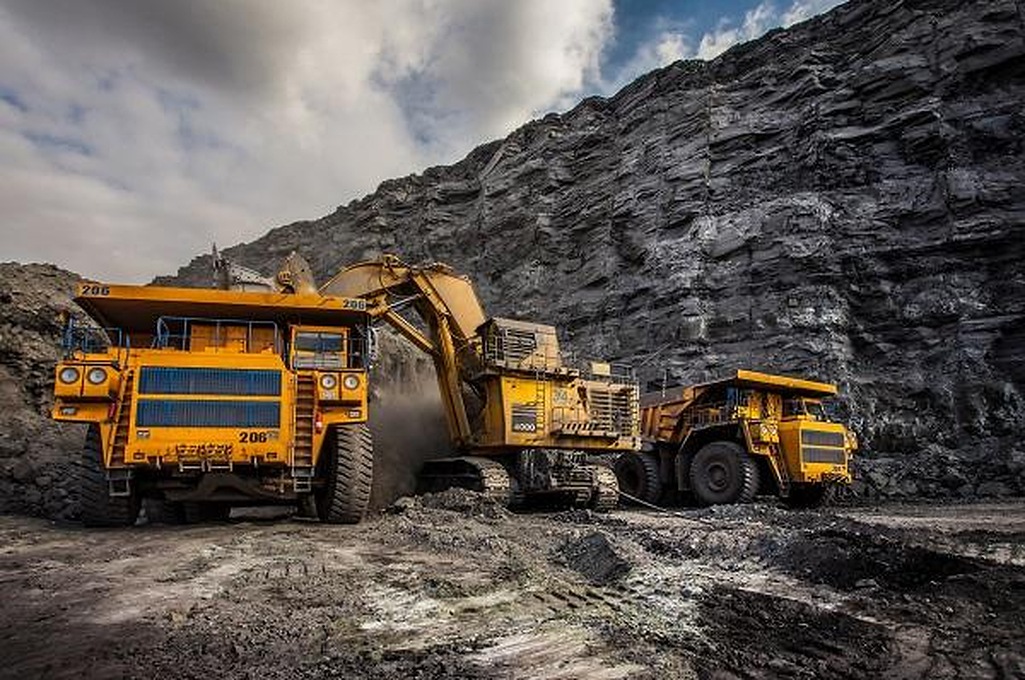
Komatsu commissioned its 1,000th autonomous ultra-class haul truck in April 2026: a 930E-5AT with a 290-metric-ton payload deployed at Barrick’s Nevada Gold Mines. The milestone comes as mining companies expand autonomy from individual trucks to connected fleets, remote operations and mine-wide control systems.
Fortescue has more than 200 autonomous haul trucks operating across the Pilbara, coordinated through its integrated operations center, the Hive. The center connects haulage with six hematite processing plants, 4,000 ore cars, rail, port, scheduling and energy systems. Fortescue says its autonomous fleet moves about 500 million metric tons a year. The example illustrates how automation can extend beyond individual equipment to coordinate material movement across multiple stages of an operation. For managers, that broadens the question from whether a machine is running to whether the wider system is producing the planned outcome.
From autonomous trucks to operating systems
Rio Tinto operates 40 autonomous drills across five drill platforms and seven Pilbara mine sites, according to the company. From its Perth operations center, a controller can plan activity for up to eight drills from a single console. Its operations center also coordinates mines, processing facilities, rail and ports. Rio Tinto says its Mine Automation System combines data from 98% of its sites into a common format.
The operating architecture changes the role of leadership without eliminating it. The management question shifts from whether a single truck is running to whether the overall system is producing the planned outcome and where human intervention is needed. BHP’s 2026 annual report describes technology as part of exploration, planning, operations and maintenance, while its Western Australia Iron Ore business is increasing autonomous haulage and other supply-chain productivity measures. BHP says 22 CAT 793 haul trucks at Newman East have transitioned to full autonomy.
One business implication is repeatability. Deloitte’s 2026 Mining and Metals Industry Outlook says mining may move from technology pilots toward scaled operating systems. It expects autonomous and semi-autonomous hauling, AI-enabled process control and predictive maintenance to expand where operations can standardize processes. That makes common data structures, clear decision rights and operational governance increasingly important as companies scale automation across sites.
Supply-chain becomes part of mine management
Automation addresses only part of mine operations. Supply-chain resilience depends on what happens beyond the mine gate.
The International Energy Agency’s 2026 Global Critical Minerals Outlook shows why. Excluding rare earths, the average share of the top refining country rose to 72% in 2025 from 70% in 2023, and the leading refining countries accounted for more than three-quarters of total refined supply growth over the two years. The agency projects a copper supply deficit of 25% by 2035 in its base case and a cobalt gap of more than 25%, with the latter linked in part to new export restrictions in the Democratic Republic of the Congo.
For mining leaders, operational efficiency therefore does not necessarily translate into supply-chain resilience. A mine can have highly predictable production and still face disruption if its concentrate depends on a narrow set of smelters, ports or trading routes. The IEA says the number of mineral tariff codes subject to Chinese export controls has tripled since 2023. It also says other producers have added restrictions on materials including cobalt, lithium and graphite.
Supply concentration makes visibility across custody, processing and delivery increasingly important. An IEA-OECD survey of more than 80 companies across copper, lithium, nickel, cobalt, graphite and rare earth supply chains found that high implementation costs, limited interoperability and the complexity of geographically concentrated networks remain barriers to wider traceability. Digital traceability can therefore function as a management capability, not just a compliance exercise. It can help companies identify where material changes hands, where processing is concentrated and where alternative routes or suppliers may exist.
Diversification also has a cost. The IEA estimates that capital costs for refining projects outside dominant suppliers can be 20% to more than 150% higher, while operating costs average about 50% higher. Those estimates do not imply that every alternative project carries the same premium. They illustrate the economic trade-off between supply security and lowest-cost sourcing.
The next leadership role is partly commercial
Traditional mining decisions have often been anchored in the resource itself. For some critical-mineral projects, however, visibility into customers, contracts and downstream processing is becoming increasingly relevant to investment and operating decisions.
Deloitte says project financing increasingly depends on resource quality, contractable demand and schedule certainty. Its 2026 outlook says original equipment manufacturers and other industrial buyers are securing parts of tier-two and tier-three supply chains through long-term contracts, joint ventures and other partnerships. For mine operators, that can make the path to the customer as relevant to project planning as the path to the ore, particularly in smaller critical-mineral markets with concentrated demand and uncertain pricing.
This does not mean every producer needs to build a fully integrated chain. Integration can increase capital needs and operational complexity, while diversification projects can face permitting, infrastructure and skills constraints. The resulting decisions involve trade-offs between cost, flexibility, speed and exposure to a small number of suppliers or buyers.
People still govern the machine
Automation changes workforce requirements rather than removing them altogether. Deloitte estimates that more than half of the U.S. mining workforce, about 221,000 workers, could retire by 2029, while the sector faces a weaker pipeline for some technical roles. Its outlook says demand is likely to grow for technicians who can operate and troubleshoot automated systems and for managers who can work with AI-enabled tools while retaining human judgment.
Research published in “Applied Ergonomics” in 2026 adds a workforce and organizational dimension. A case study of an autonomous haulage system found that automation improved safety and predictability but also increased standardization, shifted responsibilities, and reduced some opportunities for social interaction. The finding suggests that moving decisions into a control room does not automatically resolve coordination challenges; it can change where those challenges occur. Preserving operational knowledge presents a similar challenge. Experienced operators often retain knowledge about weather, ground conditions, equipment behavior, and abnormal events. As work moves into remote centers and software interfaces, companies need formal ways to capture that knowledge and connect it to data-driven systems.
That matters because automated systems are generally strongest within defined operating conditions. When conditions fall outside those parameters, organizations may still rely on experience that was never formally documented or incorporated into the system.
The Cyber perimeter grows with autonomy
An autonomous mine also has more connected systems to protect. A 2026 study in “The Extractive Industries and Society” reported that cyberattacks on mining operational technology increased from 10 incidents in 2023 to 30 in 2024 and highlighted the risk of attacks that interrupt production systems.
BHP’s 2026 annual report calls for stronger reliability, resilience and security in its technology foundations as it expands AI, automation and advanced analytics. The issue extends beyond protecting corporate data. When dispatch software, sensors, communications networks and industrial controls influence physical equipment, a cyber incident can become an operational event, with potential implications for production and safety.
That connectivity creates a different leadership test. Managers will need contingency plans for degraded communications, manual fallback procedures, vendor access, and recovery priorities alongside production targets. In an autonomous environment, resilience is partly the ability to keep operating when the digital system is imperfect.
The emerging leadership model
Mining companies are increasingly treating automation as part of the operating model rather than as an isolated technology project. The management brief now extends from fleet utilization to supply-chain concentration, from software performance to workforce readiness, and from production planning to traceability and cyber resilience.
Existing operating models illustrate the range. Fortescue links autonomous haulage with rail, port and processing control; Rio Tinto connects equipment, geological data and remote operations; BHP is combining autonomous haulage with broader supply-chain productivity programs. None of these examples makes the transition automatic. Capital requirements, infrastructure, permitting, interoperability, workforce capability and commodity cycles still determine how quickly systems can scale.
The unresolved question is whether mining companies can coordinate machines, people and supply networks as one management system while the mineral markets they serve become more concentrated, more regulated and more strategically important.