Digital models can test factory layouts, control software and robot skills before deployment. The challenge is proving that simulated performance transfers reliably to physical production.
Before a new vehicle can be built, the factory has to prove it fits. BMW Group says it has cut a factory planning test from almost four weeks to three days by using a digital model of the plant built from construction data and 3D scans.
The result demonstrates how simulation can accelerate factory planning, but it does not establish that robots can learn physical tasks virtually and perform them reliably on a production line.
That distinction matters as manufacturers expand simulation beyond layouts and control systems into robot training. Researchers continue to identify differences between simulated environments and physical conditions as a barrier to transferring learned skills to the real world.
Rehearsing before the run
Simulation is not one technology. It covers four jobs, and each asks something different of the model. Offline programming plans robot paths on a computer instead of beside the machine. Virtual commissioning tests a line’s real control software against a virtual machine before equipment is installed. AI training lets a robot practice a task thousands of times in a virtual setting. Synthetic data produces artificial images to teach a robot’s cameras what to look for.
ABB describes feeding such images into training pipelines so vision models can be trained entirely in simulation.
These applications rely on digital twins: virtual representations of machines, production cells or entire plants. But their effectiveness depends on the model’s accuracy and the task being tested. Evidence that simulation works for factory planning does not, by itself, demonstrate that it can teach a robot complex physical skill.
Shapes and software first
The established uses come first. An ISA InTech article written by two Siemens employees reports that Norwegian machine builder Tronrud Engineering cut commissioning time on a packaging machine by 25% after building a digital twin that let design, mechanics and programming proceed in parallel.
The result illustrates a practical benefit of simulation: teams can identify problems and begin work before physical equipment is ready. However, the case was reported through a Siemens publication and describes one customer’s experience.
Building the model carries a cost. Researchers at Helmut Schmidt University identify the time and effort needed to build a simulation model as the main obstacle to wider use. Maplesoft, a software vendor, says higher-fidelity models take more effort but can answer more specific design questions. Each added level of detail adds engineering work, so a manufacturer must decide which questions justify it.
Robots that learn virtually
Robot learning raises the demands on the model. A robot learns a task by trial and error, adjusting after each attempt. A physical arm cannot make thousands of attempts without wear, so simulation moves the attempts onto a computer. Researchers also randomize conditions such as friction during training so the robot tolerates differences it meets later.
NVIDIA researchers report that assembly skills learned this way succeeded 86.5 percent of the time across 20 assemblies of varied geometry in the real world. Those results came from physical laboratory trials, not sustained operation on a production line.
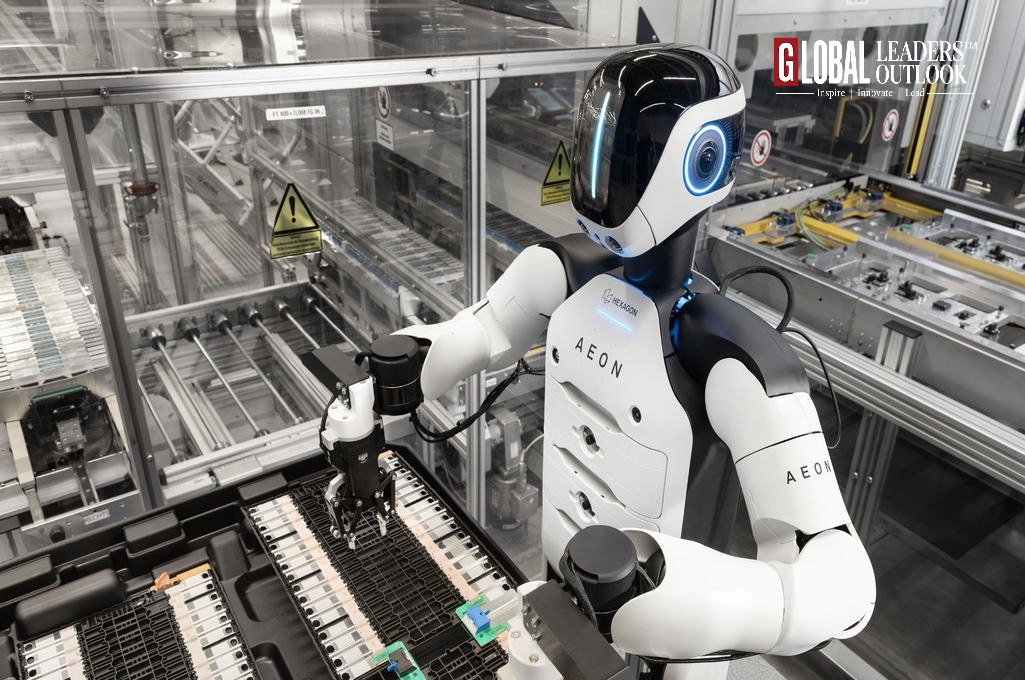
Equipment makers are moving the idea toward industry. ABB says its virtual controller runs the same firmware as the physical robot, and that Foxconn’s assembly robots, trained on synthetic data with its RobotStudio HyperReality software, reach the production line with 99 percent accuracy.
NVIDIA’s account of the same work cites 99 percent correlation between simulated and real behavior and calls Foxconn’s use an early pilot.
The figures describe different measures and should not be treated as interchangeable. The companies’ public accounts do not fully define the metrics or provide enough detail to compare them directly.
Where the model falls short
The gap has physical causes. A recent survey lists sensor modeling and the simulation of contact, deformation, and material variation among continuing challenges. A review in Frontiers in Robotics and AI notes that friction is particularly hard to model. A comparison of contact models found that some common approximations can severely widen the gap.
Those challenges bear on the tasks robots are being trained for. Seating connectors, threading cables and fitting gaskets involve contact and deformation, which the survey lists among the open problems. A policy trained on a simulator’s version of friction can meet a part that behaves differently.
Physical testing stays in the process. Virtual commissioning can end with the real controller linked to the simulation, and the laboratory assembly results come from physical trials.
The remaining question is how reliably simulation-trained robots perform over time in production. Foxconn’s pilot is one place the answer could appear. The public statements cited here give no results from sustained operation, no definition of success, and no account of the on-site tuning still required.