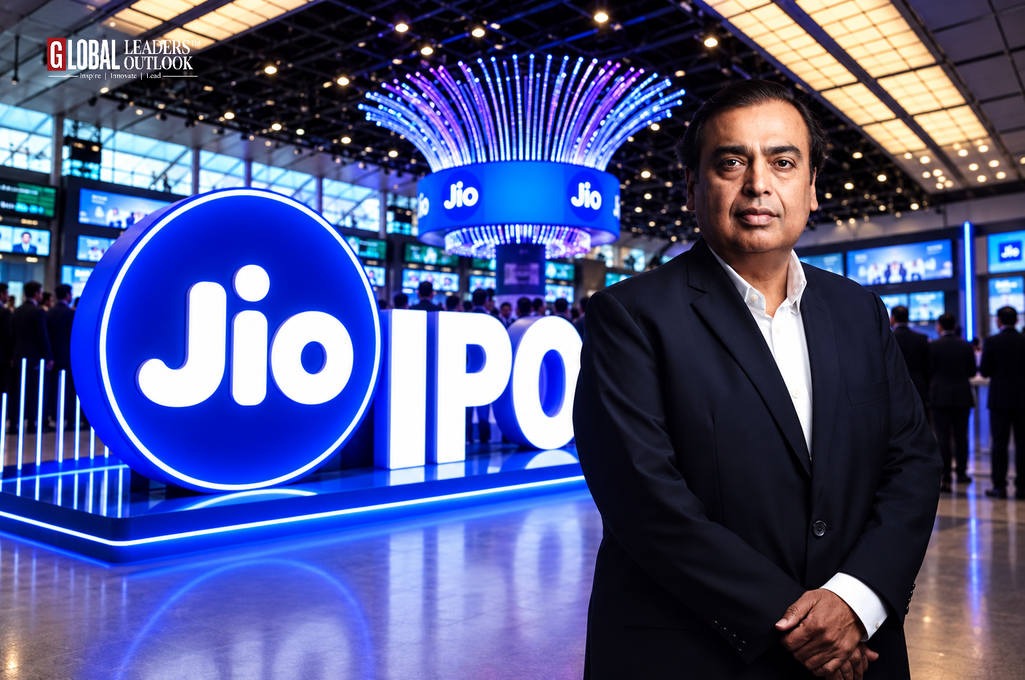
Jio’s ₹30,213 crore IPO offers just 2.93% of equity at about 3 times earnings, testing whether markets will pay platform multiples for a telecom-led earnings base.
Jio Platforms is selling 27 crore new shares, 2.93% of its equity, at up to ₹1,119, raising ₹30,213 crore at a valuation near ₹10.3 lakh crore. A March rule change allows issuers valued above ₹5 lakh crore to offer as little as 2.5%, of equity to the public. Jio is the first to use the lower threshold. SEBI’s board memorandum warned that a smaller public float “may create liquidity issues”.
What must a small float prove?
Earlier mega-listings show a debut says little. Hyundai Motor India sold 17.5% and traded ₹5,400 crore on debut, 19% of the offer; it closed 7% below issue price. LIC sold 3.5% and traded about ₹4,600 crore, 22% of the offer; it closed 8% down. By April 2026 they were 13% and 21% below issue price. Float size alone did not determine performance; institutional demand and valuation also mattered.
Jio’s book is also institution-led. By day two it was 5.5 times subscribed, with institutions at 13 times and retail about 1.5 times (IPO Premium, intermediate data). Unofficial grey-market premiums near 22% suggested expectations of a strong debut, but are not reliable indicators of the eventual listing price.
Investors should watch turnover, bid-ask spreads and price responses to earnings news. SEBI’s large-issuer sample traded 57.7% of market value annually, but its median public shareholding was 45.8%, far above Jio’s proposed float.
Lock-in expires could increase supply
About 19.75 crore shares, 2.14% of equity, trade on day one. Anchors’ 7.25 crore shares release in halves after 30 and 90 days, about ₹4,050 crore each.
The six-month expiry, around late April 2027 if allotment is on 26 October, covers non-promoter pre-IPO holders with 32.6% of equity:
Meta and Google: 158 crore shares, ₹1.77 lakh crore.
Seven larger financial investors, including PIF, KKR and Silver Lake: 118 crore shares, ₹1.32 lakh crore.
Others, including TPG and the ESOP trust: 24 crore shares, ₹2,700 crore.
These values represent potential supply, not announced sales. Meta and Google invested in 2020 at ₹488 a share, about 130% below the issue price, according to Business Today. Each of PIF, KKR and Vista holds about ₹23,150 crore, 77% of the whole IPO, so any exit would likely be staged or placed with institutions. SEBI’s study found about half of the anchor money left within a year, but it excludes strategic holders, so behaviour here is unknown.
Valuation rests on telecom earnings
At the upper end of the price band, Jio is valued at 34.3 times fiscal 2026 profit of ₹30,049 crore, and 33.6 times trailing profit through June 2026. Swastika Investment cites Bharti Airtel at about 41 times earnings, without specifying the basis. Applying that multiple to RJIL’s ₹28,200 crore profit implies a value of ₹11.5 lakh crore. However, that compares Jio’s telecom subsidiary with the entire Jio Platforms business.. Airtel’s premium comes with faster profit growth: its June-quarter net income before exceptionals rose 35% against Jio’s 9.2%.
Jio’s profit lags on capital costs. Finance costs rose 76% in FY26 to ₹8,653 crore and 42% in the June quarter. Capex fell from ₹53,510 crore in FY24 to ₹34,184 crore in FY26, leaving EBITDA less capex of ₹42,071 crore. After finance costs, that is about ₹33,400 crore before tax, a 3.2% yield. Reported net leverage of 0.36 times excludes about ₹1.05 lakh crore of deferred spectrum payments, so it cannot be compared with Airtel’s 1.17 times, which includes leases.
Tariffs are the swing factor. Assume a 15% rise, the level analysts expect, on today’s ARPU of ₹215.6 and 533.3 million customers, with no churn or downtrading. That adds ₹20,700 crore of revenue; taxed at 25%, about half of FY26 profit, cutting the multiple to about 23 times. It is an upper bound, and no major rise has come since July 2024.
Earnings concentration
RJIL generates 87.74% of revenue, 94.88% of EBITDA and 93.76% of profit. The remainder is roughly ₹18,000 crore of revenue, ₹3,900 crore of EBITDA and ₹1,900 crore of profit, derived from those shares. No cash-flow figure is disclosed. The prospectus reports one segment and no AI or cloud revenue. RIL says digital services revenue grew 20% in the June quarter, but named subsidiaries total about ₹2,300 crore of revenue. Reliance’s balance sheet, not Jio’s IPO, funds the AI build-out (Tech Times), so AI remains expectation, not earnings
Reliance Retail relationship raises disclosure questions
Reliance Retail has been the sole prepaid distributor since FY24, under master distribution and collection agreements, buying vouchers principal-to-principal. The prospectus shows ₹1.13 lakh crore received in advance from it in FY26, equal to about 77% of revenue. RIL says the margin is “in line with industry norm”, services are priced “at par with unrelated parties”, and an independent audit committee approves them.
Not disclosed: term, termination rights, commission or discount rate, minimum volumes, and comparison with third-party distributors. That matters because each percentage point of margin on this flow is about ₹1,100 crore before tax, nearly 3% of profit after tax, shifting value between Jio’s shareholders and Reliance Retail’s. The margin may sit in the voucher discount, not in disclosed expenses. Nothing disclosed suggests misconduct, but minorities cannot test fairness without the terms.
What the market must show
For this structure to become a model, Jio needs orderly trading as the 30-day, 90-day, and six-month releases arrive, with block sales absorbed by domestic institutions, and a price that tracks tariff and profit disclosures. Until then, the listing shows only that demand exceeds supply.