Revenue rose 10% to $240.8 million, but higher memory costs and lower service revenue weighed on profitability. Cash fell to $53.7 million following the Flyme acquisition.
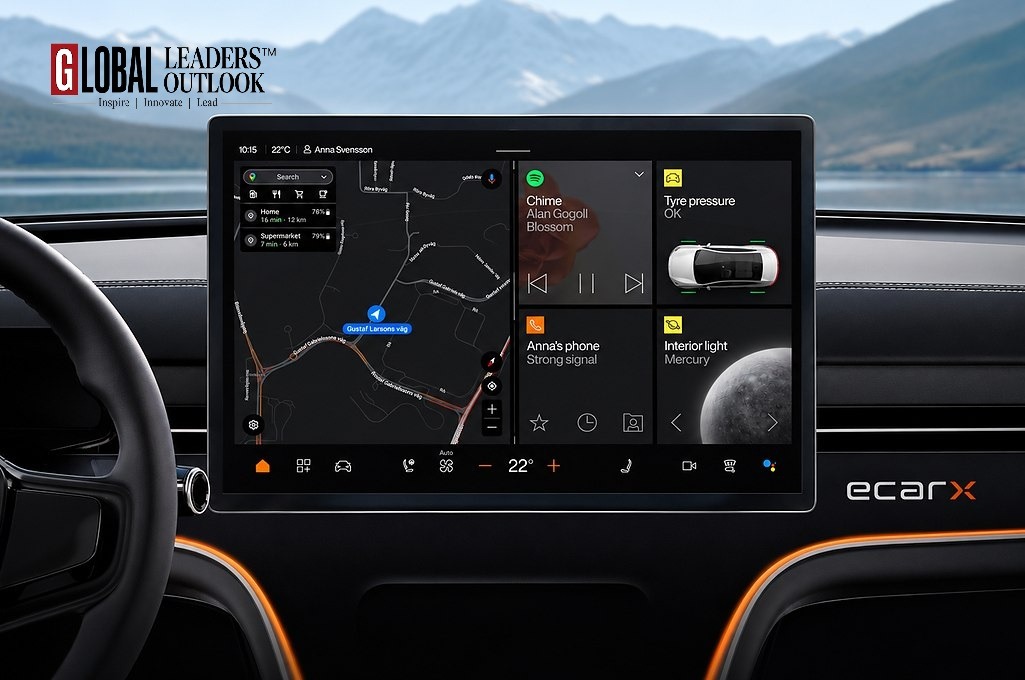
London-based automotive technology company ECARX Holdings Inc. (NASDAQ: ECX) reported a third-quarter net loss of $48.6 million, compared with a loss of $8.4 million a year earlier, as higher memory costs and weaker service revenue sharply reduced gross margin.
Gross margin fell to 7.0% from 21.9% a year earlier. Revenue for the quarter ended Sept. 30 increased 10% to $240.8 million, according to the company.
Goods sales rose 23% to $222.7 million, driven by pricing adjustments to offset memory costs and higher volume, it said. Service revenue declined 53% to $17.7 million, and software license revenue declined 56% to $0.4 million.
Shipments totaled about 721,000 units, and ECARX began mass production of 21 new vehicle models across five brands and secured 23 vehicle design wins. As of Sept. 30, more than 12 million vehicles on the road were equipped with its technology.
Memory costs outpace price increases
Cost of revenue rose 30% to $223.9 million. Gross profit fell 65% to $16.9 million. ECARX said it absorbed more of the increases to support volume growth and partner commitments. The company attributed the lower service revenue to slower vehicle model launches by partners after a second-quarter peak.
Research and development expenses fell 12% to $27.5 million. Selling, general and administrative expenses rose 11% to $25.6 million and included a $6.7 million impairment on convertible bonds previously issued by DreamSmart. Excluding the impairment, they fell 18%.
Adjusted EBITDA, a non-GAAP measure, was a loss of $37.7 million, versus a $0.9 million loss a year earlier. Loss per share was $0.13, versus $0.03.
Flyme acquisition reduces cash balance
ECARX’s cash balance fell to $53.7 million at Sept. 30, compared with $165.5 million at June 30. The decline followed the company’s $191.5 million payment during the quarter to acquire the Flyme software business. The payment was funded by cash reserves and $67.8 million in bank financing. Another $30.5 million in bank financing covered operating outflows and working capital for new program launches.
On June 22, ECARX announced an agreement to pay 1.8 billion yuan (about $266 million) for 100% of Hubei Qiguang Technology Co., Ltd., a new entity carved out of DreamSmart that holds the Flyme business. It completed the acquisition Sept. 30.
Flyme includes Flyme Auto, an in-vehicle cockpit operating system, and Flyme OS, a cross-device operating system. ECARX said the business will operate as an independent software division.
Financial statements restated for acquisition and subsidy errors
Qiguang is an entity under common control. The company restated comparative financial information by combining its results with Qiguang’s under the pooling-of-interests method.
The company also corrected errors in its accounting for certain government subsidies recognized in 2021 and 2022. Management concluded the errors were not material to previously issued financial statements but would be material to current-period statements if left uncorrected.
Arm partnership and automaker lab plans
ECARX and Arm Holdings plc (NASDAQ: ARM) announced Nov. 2 that they signed a nonbinding memorandum of understanding to explore and develop AI computing platforms for mobility and other industries.
ECARX said it is finalizing a partnership with an unnamed European luxury automaker on a Joint Cockpit AI Innovation Lab, based on Flyme OS, to develop cockpit systems for the automaker’s vehicles in China.
Forecast holds; margin pressure expected to continue
ECARX reiterated its 2026 revenue guidance of $1 billion to $1.1 billion, citing its backlog and commercial pipeline. Revenue for the first nine months was $597.5 million.
The company said it continues to work with customers and suppliers to mitigate memory costs through pricing adjustments, operational efficiencies and product mix. It expects those costs to weigh on gross margin and operating profitability over the next few quarters, including the fourth quarter of 2026.