Purchase commitments for Moon-sourced material are emerging, but the economics of extraction, dependable power, legal certainty and cybersecurity will determine whether the market develops beyond early contracts.
Artemis II reached 252,756 miles from Earth on April 6, setting a record for human spaceflight during a lunar flyby. The mission tested crew and spacecraft systems, not lunar extraction. For businesses considering lunar resources, the question is now how to turn scientific potential into a commercially viable supply chain. Prospecting hardware, power systems and offtake contracts are advancing in parallel. Executives need to know which constraints will set the return.
Prospecting precedes extraction
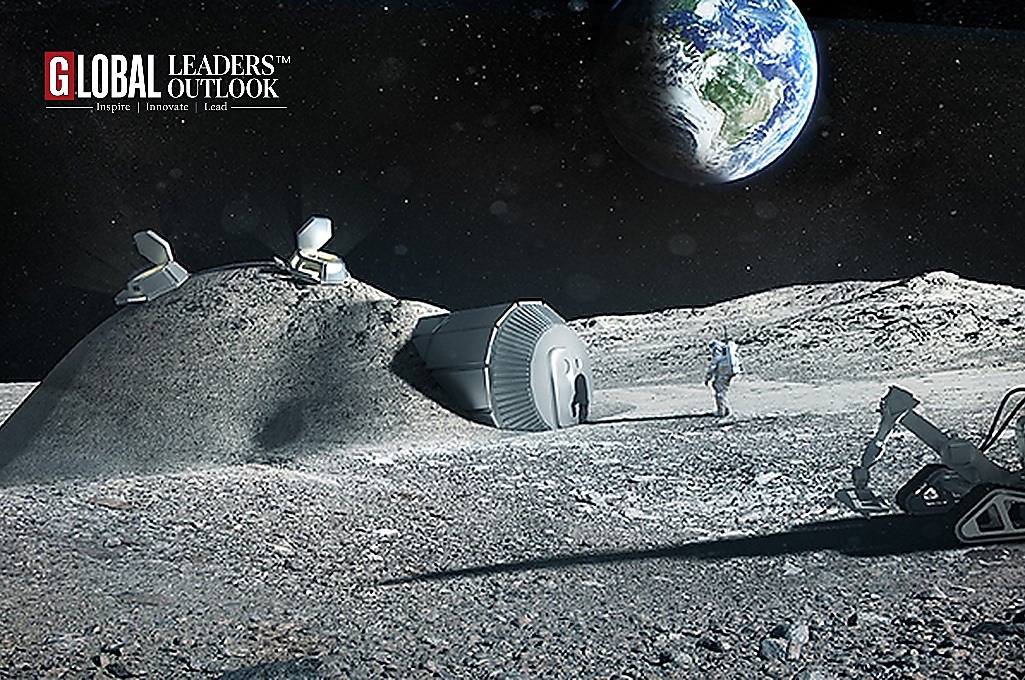
Lunar regolith contains silica, iron, titanium and oxygen-rich ilmenite, while .water ice is believed to exist in permanently shadowed regions. Jonathon Ralston, a senior principal research scientist at Australia’s CSIRO who has worked on Moon and Mars mining technology, calls current activity exploration rather than mining. Orbital scans still lack ground-truth calibration, so reported volumes are hypotheses rather than reserves.
Near-term demand centers on in-situ resource utilization (ISRU), or using materials where they are found. Water can be split into hydrogen and oxygen for propellant, the basis of an in-space refueling depot, said Sophia Casanova, who designs surface missions at ispace, a private lunar payload company.
Helium-3 is the main resource currently being pursued for return toEarth. NASA estimates the Moon holds about a million tonnes, but Ralston said concentration remains disputed. Water and oxygen could support lunar operations, while helium-3 targets a specialized terrestrial market. Neither opportunity has yet demonstrated commercial-scale lunar production.
Interlune, a Seattle developer, has built the first order book. Bluefors, a dilution refrigerator maker serving quantum computing, agreed in September 2025 to buy up to 10,000 liters annually from 2028 to 2037. Maybell Quantum and the US Department of Energy Isotope Program signed for deliveries from 2029. Interlune cites nearly $500 million in binding orders, an unaudited figure. NASA’s $6.9 million award in May funds an extraction payload slated for launch readiness in 2028. Buyers are contracting for certainty years before any lunar delivery exists.
At the chief executive’s price of about $3,000 per liter, the Bluefors ceiling is worth roughly $30 million a year: Interlune’s 20-kilogram annual target, about $400 million in revenue per Aviation Week. Bluefors covers less than 8% of that amount. Contracted demand therefore underwrites early deliveries while scale remains unfinanced.
Power, legal rights and security shape investment risk
Lunar systems must operate amid abrasive dust, extreme temperature changes and limited energy supplies, Casanova said. NASA and the Department of Energy renewed support in January for a lunar fission power system, with a development target of a surface reactor by 2030. Until reliable power is available, extraction systems will remain limited by the energy they can carry or generate locally.
The Outer Space Treaty bars national appropriation. The 1979 Moon Agreement has 18 ratifications, none from a nation that has landed. Draft UN principles are non-binding, so private operators’ compliance depends on the states that license them. Lenders will price that ownership risk into every long-dated contract.
Commands cross ground stations, relays and surface assets run by different parties, which widens the attack surface. Weaknesses at interfaces between these systems could disrupt operations or compromise mission control, making security standards and clear responsibility important procurement requirements.
A NASA technical analysis puts helium-3 at a few parts per billion in regolith. Yield depends on processing large volumes with hardware that must be launched, landed and powered. The relevant measure is not how much helium-3 the Moon contains, but how much usable material a system can recover at a cost customers will pay.
Each constraint has a matching opening
Power could support a shared-infrastructure business. A lunar fission system backed by NASA and the Department of Energy could eventually provide power as a service, reducing the need for each mission to develop its own supply. That opportunity depends on the system reaching deployment and being available to commercial users.
Legal uncertainty creates a role for governments and standards bodies. NASA said that the Artemis Accords reached 77 signatories by Oct 19, 2026. They treat extraction as compatible with the Outer Space Treaty. A UN working group’s draft principles require environmental assessments before extraction, with consensus targeted for 2027. Common standards could reduce uncertainty, but they will not substitute for enforceable national rules or settle every dispute over competing operations..
Cybersecurity could become a procurement advantage for vendors that can demonstrate secure communications and reliable command systems across operators. Meanwhile, the European Space Agency-commissioned MIRORES study is examining extraction economics in relation to customer location and willingness to pay. Independent cost estimates could help investors compare projects on more than resource estimates and announced contracts.
Capital will follow the cost curve, not the order book
Quantum-equipment manufacturers should treat lunar helium-3 as a potential future supply source, with delivery milestones and a terrestrial fallback written into procurement plans. Investors should underwrite against the cost curve, not the order book. Agencies and regulators need settled principles before deliveries begin. The thesis holds only where scarcity pays for the journey, and helium-3 is the first resource to test it.