Bangladesh’s measles outbreak has reached 999 suspected and confirmed deaths, with more than 166,000 suspected cases reported since March, according to data from the Directorate General of Health Services (DGHS). Of the 999 deaths, 100 were laboratory-confirmed as measles-related and 899 involved suspected measles cases, according to DGHS data. The country has also recorded 19,835 laboratory-confirmed infections and 146,359 hospitalizations linked to suspected measles cases.
The figures underscore the scale of an outbreak that has spread nationwide despite an emergency vaccination campaign launched earlier this year. The U.S. Centers for Disease Control and Prevention's latest surveillance data also lists Bangladesh among countries reporting major measles outbreaks.
Vaccination gaps fuel transmission
Health officials and experts have linked the outbreak to accumulated immunity gaps following disruptions to routine immunization. Experts say routine immunization was disrupted during political turmoil in 2024 and 2025, while changes to vaccine procurement contributed to shortages.
WHO reported in April that measles transmission had reached 58 of Bangladesh's 64 districts, with children under 5 accounting for 79% of reported cases at the time.
The disruption included postponed and canceled vaccination activities, while changes to vaccine procurement were also cited by Bangladesh's health minister as a factor behind supply shortages. Health Minister Sardar Md. Sakhawat Husain told parliament that procurement changes had contributed to a vaccine shortage.
Bangladesh had historically achieved relatively high measles vaccination coverage, but coverage has fallen below the 95% level considered necessary to prevent sustained transmission. UNICEF data show that second-dose measles-rubella coverage fell from 89% in 2019 to 80.7% in 2023.
Emergency campaign expands protection
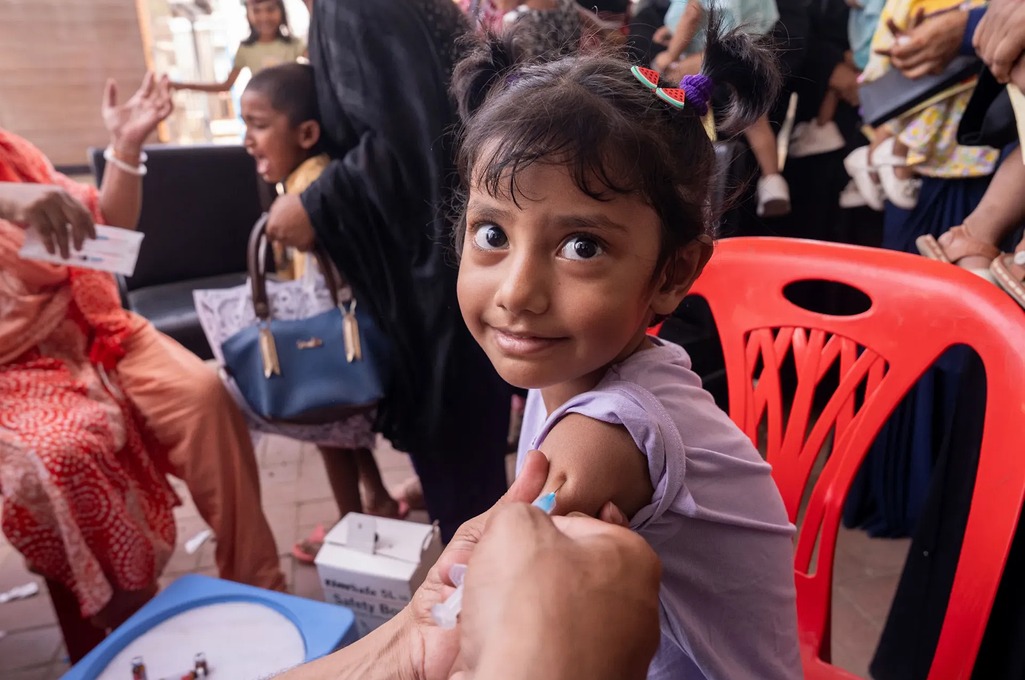
The government, with support from WHO, UNICEF and Gavi, launched an emergency measles-rubella vaccination campaign in April. The initial phase targeted children aged 6 months to 59 months in high-risk areas before the campaign expanded nationwide.
UNICEF Representative in Bangladesh Rana Flowers said the campaign was being carried out at a critical moment, highlighting the risks faced by children who had missed routine vaccinations.
WHO Representative to Bangladesh Dr. Ahmed Jamsheed Mohamed also said the campaign would help increase protection among children at risk.
WHO says measles-containing vaccines are safe and effective.
More than 19.7 million children have been vaccinated through the emergency campaign, according to health ministry data cited by Reuters. But experts say emergency campaigns cannot substitute for sustained routine immunization and catch-up programs.
Pressure on hospitals
The outbreak is unfolding alongside a growing dengue burden, placing additional pressure on Bangladesh's health system. Reuters reported that hospitals are facing overcrowding and shortages as they treat patients from both outbreaks. At one government hospital in Dhaka, the number of patients has exceeded its designed capacity, while measles patients have been treated on the floor.
Measles is highly contagious but preventable through vaccination. WHO and UNICEF say at least 95% coverage with two doses is needed in every community to prevent measles outbreaks and sustain population-level protection.
The emergency campaign can close some of the immediate gaps, but Bangladesh's longer-term ability to prevent another outbreak will depend on restoring routine immunization coverage and reaching children who have missed one or both doses.
.jpeg)