Investor-backed buyers are acquiring family-run warehouses across borders, but analysts say local ties, integration and trade uncertainty will decide whether scale pays.
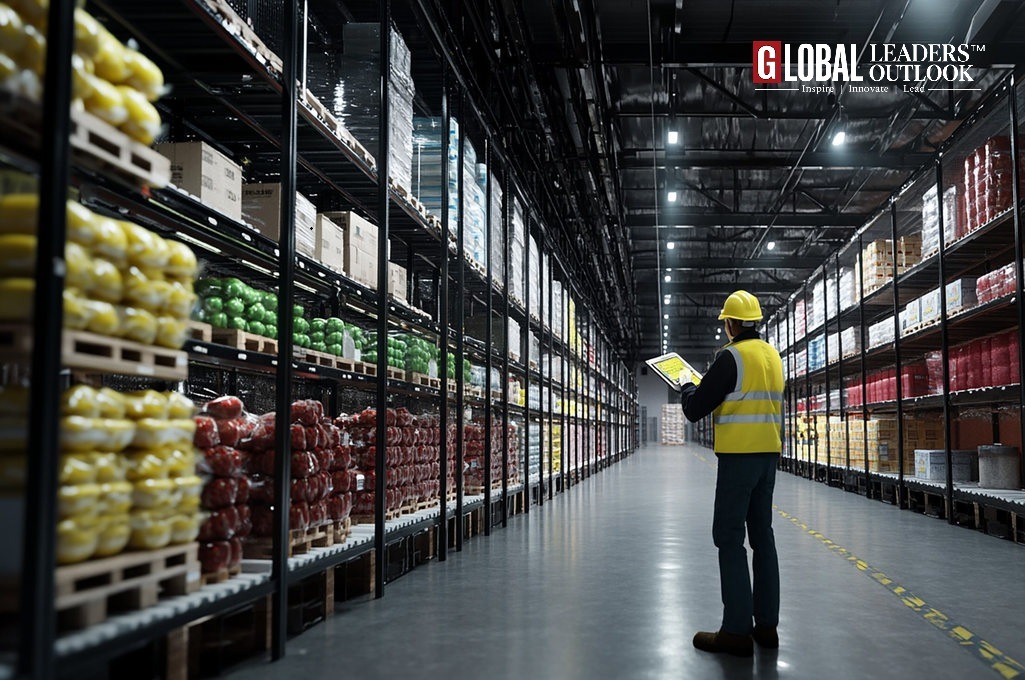
Investor-backed operators are buying independent cold stores across Europe, betting that fragmented ownership, room to expand across borders and scope to improve operations will pay off. Constellation Cold Logistics’ Oct. 12 announcement of an agreement to acquire Norway’s Impruv Logistics AS, adding 25,000 pallet positions, is the latest test of that strategy. A pallet position is a standard measure of warehouse capacity. The broader question is whether consolidating independent operators can generate lasting returns without undermining the local capabilities that make them attractive acquisitions.
Building platforms through acquisition
Buying established businesses gives investors customers, staff and sites immediately, rather than waiting for new facilities to fill. Constellation shows the model. Arcus Infrastructure Partners created it in 2020 by combining businesses in Belgium, Norway and the Netherlands, and private equity firm EQT agreed to acquire it in June 2024.
Constellation subsequently entered Poland through Wimar Coldstore, south of Warsaw, bringing its presence to 10 countries. In June, it agreed to acquire French cold-storage businesses Locagel and Transfreeze. The Impruv transaction remains an announced acquisition, not a completed deal.
Other operators are pursuing a similar strategy. CubeCold bought SG in northern Italy and Sivafrost in Belgium in 2025, and One Frio launched in November 2025 with four Dutch and Irish businesses. Supply Chain Digital reports that Constellation uses institutional capital for automation and sustainability upgrades.
Where the opportunities lie
OC&C Strategy Consultants estimates that large international platforms control roughly half of Europe’s outsourced cold-storage capacity, while founder-led independents hold 35% to 45%, according to the Global Cold Chain Alliance (GCCA), which published the analysis. The split varies by country. In the Netherlands and Britain, independents hold 25% to 35% and major operators 45% to 55%. In Czechia, large international groups hold as little as 10%.
OC&C partner Casper Roex said northwestern markets are heavily picked over, making winners harder and costlier to identify. Southern and eastern Europe remain more fragmented. Italy and Spain, in particular, have a larger share of independent operators, making them potential areas of interest for investors, although OC&C did not identify Poland as a specific target market in its analysis.
Europe’s cold-storage capacity grew 90% over six years, according to the GCCA’s 2026 rankings. That expansion provides industry context, but it does not establish how profitable individual warehouses are or whether acquisitions will generate attractive returns. Fragmented ownership creates potential acquisition opportunities; it does not, by itself, demonstrate that those opportunities are financially sound.
Why family-owned businesses matter
Constellation’s portfolio now spans Ireland’s Colso Coldstorage, founded in 1974, the family-run Lau van Haren Cold Stores in the Netherlands and Wimar, founded in 1990 to process frozen fruit. Such operators serve food producers, importers and distributors that need temperature-controlled storage. Their established customer relationships are knowledge of local markets can be as important to a buyer as their physical capacity.
The GCCA’s Adam Thocher said borders across Europe’s 44 countries make consolidation less straightforward, but that many family businesses are considering their next chapter. That points to ownership transitions, though the sources do not show succession is the main reason owners sell. Buyers say they offer capital, technology and a wider network. Jan Nielsen, Constellation’s Managing Director Nordics, said Impruv adds local knowledge and customer relationships alongside capacity.
The challenge is to preserve those advantages while introducing changes that improve performance. If a business’s value depends partly on trusted customer relationships and knowledge of local requirements, an acquisition strategy that focuses only on expanding the network risks overlooking what made the original operation successful.
Scale versus local expertise
Carlos Rodriguez, who led Constellation until Oct. 1, said customers gain consistency and security from one operator across countries, and that scale can lower costs. Constellation says it keeps local management teams and its local focus.
Yet Rodriguez called operating as one company while respecting local requirements the group’s key challenge as well as its biggest opportunity. OC&C’s analysis said European deals are taking longer, with more attention paid to keeping ties with employees, customers and local communities.
That tension is central to the consolidation model. Standardized systems and shared resources may improve efficiency, but excessive centralization could weaken the local expertise and customer ties that attracted buyers in the first place. The potential benefits remain unproven in the available evidence: no published figures quantify the savings achieved through Constellation’s acquisitions.
What could limit consolidation?
Acquisition opportunities are not unlimited, and investors must weigh the cost of buying a business against the improvements they expect to make. Roex said U.S.-based consolidators have shifted from buying to managing existing European portfolios, though a return is not unthinkable. In northwestern Europe, competition for attractive targets has also made deals harder to pursue.
Demand is uneven. Roex said red meat is shrinking as changing consumer patterns and regulation affect processing volumes, which would weigh on any buyer reliant on that sector. Thocher said uncertainty over trade shifts tied to geopolitical tensions, and over climate change, is tempering consolidation, though neither source explains how these pressures would reach individual warehouses.
Integration adds risk. Disrupting established customer relationships could undo the logic of buying a local specialist. A customer who relies on a familiar manager may reconsider a supplier when ownership changes, so retention matters as much as price. Constellation also changed leaders on Oct. 1, when Abhy Maharaj, formerly of rival NewCold, succeeded Rodriguez.
The leadership transition adds another variable as Constellation continues to expand. The available information does not yet show how the new leadership will affect integration, operating performance or the returns from recent deals.
The test is measurable value
The evidence shows a fragmented market, a pipeline of independents and a plausible case for scale. It does not yet establish that consolidation produces lasting financial gains.
That case will depend on selecting businesses that fit, integrating them without losing the local capabilities customers pay for, and delivering gains that can be measured. Until post-acquisition results for sites such as those in Norway and Poland are published, the case rests on expectation rather than proof.