Biological processes can already make chemicals, proteins and materials at commercial and pilot scale. Building and financing enough commercial capacity to turn that technology into reliable supply remains the industry's unresolved challenge.
A fermentation plant the size of an apartment building is not financed like a conventional chemical plant. That gap in financing is now the central obstacle for an industry that promises to remake how the world makes basic materials.
Biomanufacturing, the use of biological processes such as fermentation to produce chemicals, proteins and materials, has expanded the range of products that can be made with biological inputs. The McKinsey Global Institute estimated in a May 2020 report that as much as 60% of the physical inputs to the global economy could, in principle, be produced biologically, identifying roughly 400 use cases worth up to $4 trillion a year in combined economic impact over the following 10 to 20 years. That figure represents potential rather than current commercial output. Five years later, one of the industry's biggest challenges lies in increasingly in moving technologies from development into dependable industrial supply.
Scale-Up brings new challenges beyond the lab
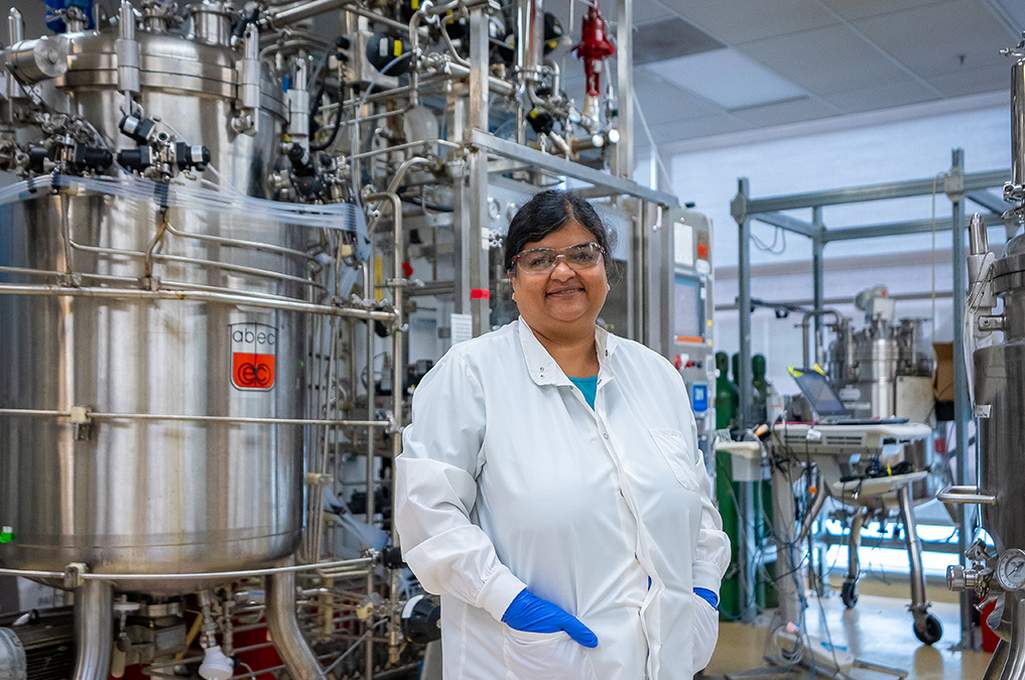
Moving a microbial process from a benchtop reactor to an industrial tank changes more than volume. Contamination control, heat removal, oxygen transfer and downstream separation of the target molecule from fermentation broth all behave differently at scale. A process that performs well in a small reactor can require substantial changes in equipment, operating conditions and economics before it works reliably at industrial volumes.
Zymergen, which used engineered microbes to manufacture materials, raised roughly $500 million in an April 2021 initial public offering. By that August, it said it no longer expected product revenue that year, citing technical problems customers encountered while implementing its film product and a smaller, slower-growing target market than anticipated. It cut about 220 positions that November and was acquired by Ginkgo Bioworks in 2022 in an all-stock deal valued at roughly $300 million. Its collapse is now cited across the industry as evidence that scale-up problems and misjudged market size can undo a well-capitalized company even after the core biology works.
The episode illustrates a broader risk for biomanufacturing developers: even when the underlying biology works, technical scale-up, customer adoption and market assumptions can undermine a well-capitalized company.
Capital costs collide with unproven returns
A commercial fermentation plant costs far more to build than a pilot line, while lenders and investors need evidence that the facility can operate reliably and generate sufficient revenue. That creates a timing problem: developers need capital to build the plant, but financiers may want evidence of customer demand and operating performance before committing capital.
A joint venture between Cargill Inc. and Germany's HELM AG addressed that circularity by opening a $300 million facility in Eddyville, Iowa, in July 2025.
The plant has a rated capacity of 66,000 metric tons a year of 1,4-butanediol, a chemical historically made from fossil sources. The roughly four-year period from announcement to opening illustrates the capital and construction cycle involved in moving biomanufacturing into commercial production.
Smaller developers face a steeper version of the same math. Finland's Solar Foods has built a 160-ton-a-year plant for its protein ingredient, Solein. Its planned 6,400-ton-a-year expansion depends on a final investment decision the company aims to make in 2026, contingent on total financing and more binding customer agreements. Business Finland granted the company €77.8 million in June, split between a grant and a research loan, tied to that same investment decision.
Liberation Bioindustries, a contract manufacturer building a 600,000-liter plant in Richmond, Indiana, has used several financing mechanisms, including equipment financing, a federal loan guarantee and a convertible note, to fund construction. The company says the facility is nearing completion.
Customers are also part of the financing equation
Project financing often depends on offtake agreements or other evidence of future demand. That creates a recurring tension: customers may be reluctant to commit to large volumes before a plant is operating, while lenders and investors may be reluctant to finance the facility without evidence that customers will buy its output.
Solar Foods has signed memorandums of understanding and letters of intent covering 6,500 to 7,650 tons a year of Solein but describes those agreements as non-binding. Liberation said in December that well over half of its planned capacity was under contract or in late-stage negotiation, without specifying how much of that capacity was covered by binding agreements.
The distinction matters because expressions of interest can demonstrate market demand without providing the same revenue certainty as a binding offtake contract. For developers, that can lengthen the period between proving the technology and securing the capital needed for a commercial plant.
Governments try to reduce scale-up risk
Governments in the United States and China are also treating industrial biotechnology as a strategic manufacturing capability, although their approaches differ.
China’s Ministry of Industry and Information Technology said its biomanufacturing industry reached 1.1 trillion yuan, or about $156.2 billion, over the 2021-2025 five-year plan period. It said nearly 40 pilot-scale capacity platforms were supported, according to CGTN. The ministry also reported that bio-fermentation products represented more than 70% of global output, although the scope of that figure needs to be understood in the context of the specific product categories covered by the ministry's assessment.
The U.S. has pursued a combination of proposed federal investment, defense-related biotechnology initiatives and efforts to expand industrial scale-up capacity. A congressional panel recommended at least $15 billion in biotechnology investment over five years. Trump’s fiscal 2026 defense authorization law also directed the Pentagon to create a biotechnology management office. House members have since proposed additional bioindustrial scale-up facilities and a National Biotechnology Coordination Office.
Shared facilities could address two problems at once
One proposed solution is shared, precommercial scale-up infrastructure that allows multiple companies to test and refine processes at larger volumes without each developer having to finance a dedicated commercial plant immediately.
Such facilities could address both technical and financial risk. Developers could generate operating data at larger scale, while investors and potential customers could gain greater visibility into production performance before a company commits billions of dollars to dedicated capacity.
Whether these facilities receive funding and operate at sufficient scale remains an open question. But the logic behind them is straightforward: the industry needs a bridge between laboratory success and bankable commercial production.
Biomanufacturing's next stage will therefore depend on more than better microbes. Companies still have to prove that those microbes can perform reliably at industrial scale, secure customers willing to commit to future production and raise enough capital to build the infrastructure.