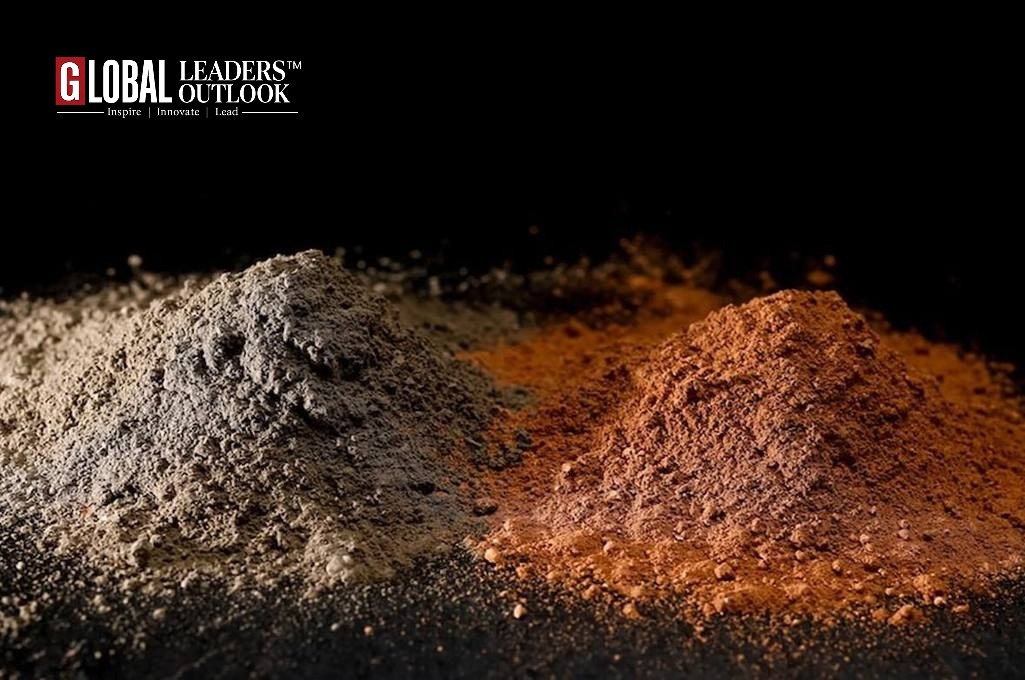
Reducing clinker content offers cement producers a more immediate route to lower emissions, but the chemistry of limestone means carbon capture will remain necessary for deeper cuts.
Heidelberg Materials paused GeZero, a carbon capture project at its Geseke cement plant in Germany, on Oct. 22. Designed to capture about 700,000 metric tons of carbon dioxide annually from 2029, the project no longer has robust business case under current conditions, the company said. It also cited delays and uncertainty around the transport and storage networks needed to move the capture gas.
Cement production at Geseke continues. The pause highlights a challenge facing the industry: producers must reduce emissions even where the infrastructure required for carbon capture is not ready. Changing the composition of cement offers one route, allowing manufacturers to reduce their dependence on clinker before large-scale capture networks become available.
Limestone is what cleaner fuel cannot fix
A cement kiln releases carbon dioxide in two ways. Burning fuel to reach about 1,500 degrees Celsius is the first. The second is chemical: when limestone is heated to form clinker, the compound that binds cement, it breaks down into lime and carbon dioxide.
Columbia University’s Climate School attributes about 85% of cement’s emissions to clinker production, with the limestone reaction accounting for roughly half of the industry’s total emission. Switching to cleaner fuels can reduce combustion emissions, but it cannot prevent the carbon dioxide released by the chemical reaction. Reducing the amount of clinker in each ton of cement, therefore, addresses a larger share of the emissions challenge.
Changing the recipe before building capture networks
Producers can lower clinker content by replacing part of it with supplementary cementitious materials. For decades, fly ash from coal plants and slag from steel mills filled that role, but the International Energy Agency says net-zero targets in those industries are shrinking their supply.
Calcined clay, which is heated at much lower temperatures than clinker, is a newer substitute. Its most common blend, LC3, combines 30% calcined clay and 15% limestone with clinker and can cut emissions by up to 40%, according to the Stockholm Environment Institute and the Leadership Group for Industry Transition, or LeadIT.
Producers can take this step largely on their own, because it depends on suitable clay and equipment to heat it, which they can source and install without waiting for outside infrastructure. Capture involves more parties. The gas must be separated from kiln exhaust, purified, liquefied and moved by rail, ship or pipeline to a storage site, and Heidelberg noted that such projects rely on other companies that handle storage. At Geseke, a project awarded 191 million euros from the European Union’s Innovation Fund was paused anyway. Global Cement reported similar pauses in Sweden, Canada and Belgium over the past year, for reasons that included rejected public funding, low carbon prices and uncertain infrastructure.
Clinker cuts lead in France
In western France, Heidelberg’s Airvault plant shows how one producer is ordering the steps. In May, the company commissioned a new kiln line there as part of an investment of more than 350 million euros that the French government partly funded. It says the project lowers the clinker proportion in the cement and, with alternative fuels and efficiency gains, will cut the plant’s carbon footprint by almost 30% compared with previous production.
Calcined clay is also planned, and the company describes the work as paving the way for a proposed capture project of about 1 million metric tons a year that has secured European Union funding.
Lafarge France shows the clay route running at commercial volume. A company executive told the Cemtech Europe conference in Paris in October that its French calcined clay cement offering is expected to total 1.1 million metric tons in 2026.
These projects suggest that clinker substitution and carbon capture need not compete. Producers can reduce emissions through changes to the cement mix while developing capture capacity for the emissions that remain.
Scale and supply limit the recipe route
The clay-based method remains at an early stage, with existing and announced plants expected to produce 26 million metric tons of lower-carbon cement annually, according to LeadIT. Even with a 35% clinker replacement rate, this would account for less than 1% of the roughly 4 billion tons of cement produced worldwide each year.
The supply of alternative materials could become a constraint as adoption expands. A McKinsey scenario presented at Cemtech Europe suggests Western Europe could face a shortage of 25 million to 30 million tons by 2035 as supplies of fly ash and slag decline.
Meanwhile, the industry's reliance on clinker has increased, with its share of cement production rising from 66% in 2015 to 71% in 2022, according to the International Energy Agency, while carbon capture is projected to address less than 2% of global cement emissions by 2035, LeadIT estimates.
What order means for producers and buyers
The sequence decides what producers can sell before capture infrastructure exists. A plant that cuts its clinker share can sell lower-carbon cement now, while one relying on pipelines and storage must wait. Buyers should ask which route a reduction rests on. Recipe changes are more deployable, as Geseke’s stall shows, yet they cannot eliminate limestone’s CO2, so the International Energy Agency says capture remains necessary.
The industry's decarbonization pathway will depend on getting the sequence right: reduce clinker wherever possible, expand alternative material supplies and develop carbon capture for the emissions that substitution cannot remove. The future of low-carbon cement begins with its ingredients, but it will not end there.