South Africa’s power surplus has not translated into dependable access for data centers. As AI infrastructure demand grows, the continent’s ability to deliver electricity through its grids could prove as important as its generation capacity.
In August, South Africa’s state utility and its largest data center operator offered sharply different accounts of the country’s electricity problem. Eskom Chairman Mteto Nyati told the Financial Times that the utility has electricity it could not sell and was courting major technology companies, including Amazon, Microsoft and Google. Teraco’s Bryce Allan, however, told TechCentral that generation was not the constraint facing data center operators. They needed dependable access to the grid.
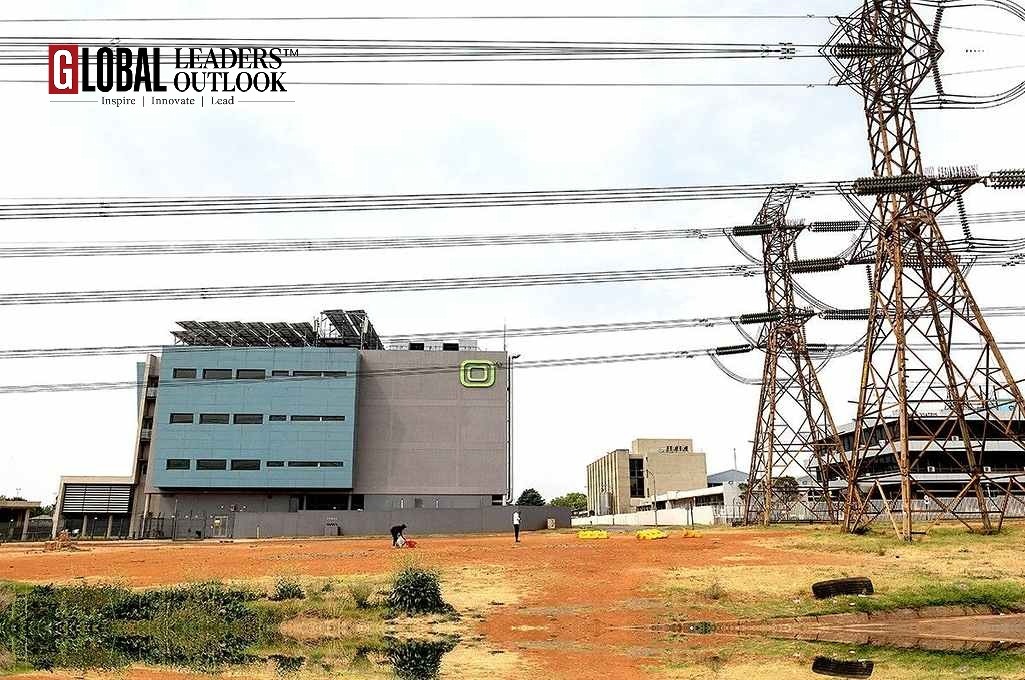
That distinction points to a larger challenge for Africa’s AI infrastructure ambitions. Electricity may be available at the generation level, but data centers cannot operate on a national surplus alone. They need a reliable connection, sufficient transmission capacity and the ability to secure power where their facilities are located. South Africa illustrates why those requirements are becoming a critical part of the investment equation.
What the surplus does not measure
After the government removed the cap on private generation in 2022, large power users increasingly turned to their own supply. Some built generation capacity, while others entered into agreements with independent producers. This reduced their dependence on Eskom and changed the utility’s demand profile.
Eskom entered this winter with about 6 gigawatts of surplus peak capacity, according to TechCentral. Teraco puts the figure at between 3 and 6 gigawatts, a wide range highlighting the uncertainty around how much spare generation is actually available
Neither figure establishes how much electricity can be delivered to a particular data center site. Spare generation at peak demand does not necessarily mean that the transmission network has the capacity to move power to a new campus.
That distinction matters as investment in data centers accelerates. Analysts quoted by the Financial Times have warned that planned development could place additional pressure on the grid, even as Eskom reports excess generation capacity.
The grid is the bottleneck
A data center needs two things from the electricity system: a connection with sufficient capacity and a dependable supply of energy. Without the first, the second cannot reach the facility. This is also why operators sourcing electricity from private generators in other provinces depend on wheeling arrangements.. Wheeling can cut costs, but only if the network can carry the volume.
Baker McKenzie puts AI-focused facilities at 100 megawatts or more per site, against 10 to 25 for conventional data centers. In July, Cape Town approved two facilities expected to require about 170 megawatts combined. This is close to roughly 189 megawatts Teraco operates across its entire estate.
Who controls the connection?
The transmission system is already under pressure. The National Transmission Company South Africa lists nearly 24 gigawatts of renewable projects with approved or pending connection quotes over five years, against a plan for about 14,500 kilometers of new transmission lines. Not all proposed projects will be built, so the connection pipeline is not a measure of guaranteed future demand. It nevertheless shows how many developers are competing for access to the network.
The Governance Gap Behind Grid Access
The ownership and governance of that network are also changing. On July 31, President Cyril Ramaphosa endorsed moving the transmission network into an independent, state-owned operator. Eskom’s board backs the idea but wants the assets transferred at an “appropriate point in the future.” A lender financing a campus must ask who will honor a wheeling agreement signed today, and until the transfer date is fixed, the answer has no name.
How operators route around Eskom
Teraco’s plan secured a grid capacity allocation in February 2024 and is building a 120-megawatt solar plant due for commissioning in the fourth quarter. With wind contracts, it expects renewables to cover more than half its consumption by the end of 2027.
Chris Hattingh of the Centre for Risk Analysis told the Financial Times that courting such customers works for Eskom only if they remain “anchor tenants rather than backup suppliers.” Wheeling fees would still pay for the network, though not for the energy.
Kenya’s stalled Microsoft-G42 project reads as a power story, but accounts of its cause differ. President William Ruto said running the full 1-gigawatt facility, against national installed capacity of about 3 gigawatts, would mean cutting power to half the country. Bloomberg reported that the companies asked the government to guarantee annual payments for a set amount of capacity, which it could not do. The accounts are compatible: a guarantee turns a grid’s limits into a public liability. Kenyan officials say talks continue.
What lenders and operators should ask
For operators, site selection turns on paperwork: an allocation letter and an executed wheeling agreement outweigh a surplus on a utility’s books. For Eskom, revenue depends on pricing passage and standby supply well enough to keep customers who can generate their own. Allan expects South African AI demand to be mainly inference, which runs on smaller clusters that avoid multi-hundred-megawatt connections. Approval is permission to build, not a measure of demand.
Eskom is courting data centers with a product it holds in surplus while the product they need is slated to leave the company. The pace of South Africa’s data center expansion will depend on who inherits the lines and on what terms.