Tashkent talks yield 11 agreements spanning uranium supply, critical minerals and heritage conservation as Modi and Mirziyoyev chart a new phase in Central Asia engagement
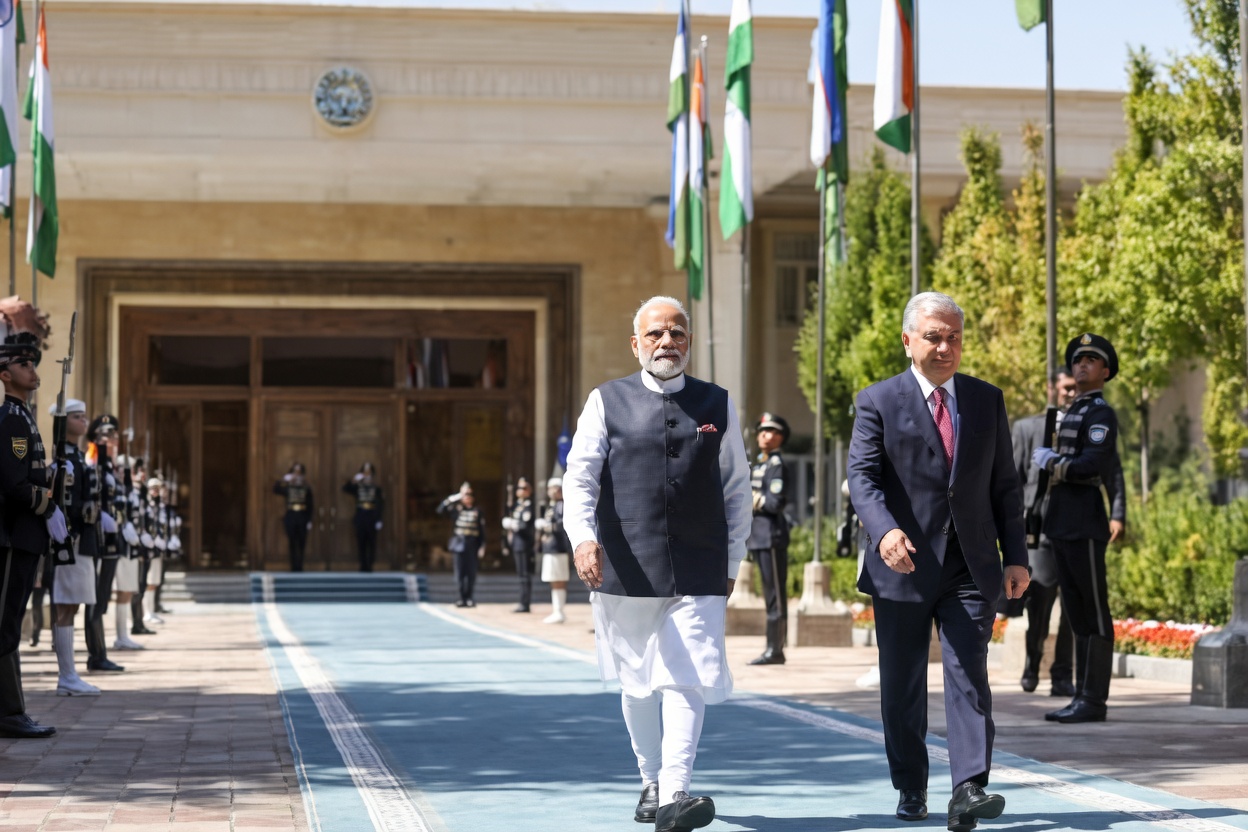
India and Uzbekistan are upgrading their relationship to a comprehensive strategic partnership, with uranium supplies, critical minerals and trade emerging as key areas of cooperation following talks between Indian Prime Minister Narendra Modi and Uzbek President Shavkat Mirziyoyev.
The two leaders set a target of $5 billion in annual bilateral trade by 2030 and oversaw the signing and announcement of 11 agreements and initiatives covering mining, tourism, education, health, environment protection, culture and civil nuclear cooperation.
What was agreed
A key outcome was the establishment of a framework for the long-term supply of uranium from Uzbekistan to India as New Delhi seeks to secure fuel for its expanding civilian nuclear power program.
The countries also signed an agreement on cooperation in geology and mineral resources, creating a framework for collaboration in mining and critical minerals.
Other agreements span Ayurveda and traditional systems of medicine, higher education and scientific research, environmental protection, tourism, archival work and economic and financial dialogue. India and Uzbekistan also established a partnership between Gujarat and the Samarkand region.
The two countries agreed to a cultural exchange program for 2026-30 covering festivals, art tours and institutional exchanges. They also signed a Letter of Intent for the conservation of restoration of the ancient Buddhist sites of Fayaz Tepa and Kara Tepa in Termez, Uzbekistan.
India announced a $1 million grant for afforestation in the Aral Sea region, along with 100 Lal Bahadur Shastri scholarships for Hindi-language studies and an ICCR Sanskrit Chair at Tashkent State University of Oriental Studies.
Digital payments were another area of cooperation. NPCI International Payments Ltd. and Uzbekistan’s National Interbank Processing Centre signed a commercial agreement that will enable Indian UPI apps to scan Uzbekistan’s national UZQR codes for merchant payments.
Uzbekistan’s global approach to its uranium sector
Uzbekistan has been opening its uranium sector to international partnerships as it seeks to expand production and develop relationships with major global players.
State-owned Navoiyuran has partnered with France’s Orano and Japan’s ITOCHU on development of the South Djengeldi uranium deposit.
India’s growing engagement adds another major economic partner to Uzbekistan’s international uranium strategy. For Tashkent, partnerships with major economies can support investment, technology development and access to international markets.
For New Delhi, Uzbekistan offers another potential source of natural uranium as India seeks to diversify supplies for its nuclear power program.
India’s need to import uranium
India is planning a major expansion of its nuclear power capacity with a target of reaching 100 gigawatts by 2047, the target year for the government’s Viksit Bharat vision.
Domestic uranium resources alone may not be sufficient to support the country’s long-term nuclear expansion. India has therefore pursued uranium supplies from overseas sources to supplement domestic production and strengthen the reliability of its nuclear fuel supply.
As nuclear power becomes a larger part of India’s energy strategy, securing reliable supplies from multiple international sources is expected to remain important.
Why Uzbekistan
Uzbekistan is one of the world’s major uranium producers, making it strategically relevant to India’s efforts to diversity its nuclear fuel sources.
Closer uranium cooperation could give India another potential source of natural uranium while strengthening its broader economic and strategic engagement with Central Asia.
The relationship extends beyond nuclear energy. Cooperation in critical minerals, tourism, education, traditional medicine, environmental protection and digital paymens creates additional opportunities for trade and investment.
For Uzbekistan, deeper engagement with India provides an opportunity to strengthen commercial ties with one of Asia’s largest economies.
The upgraded partnership places uranium within a broader strategic relationship encompassing energy security, critical minerals, trade, technology, education and cultural cooperation.
.jpeg)