
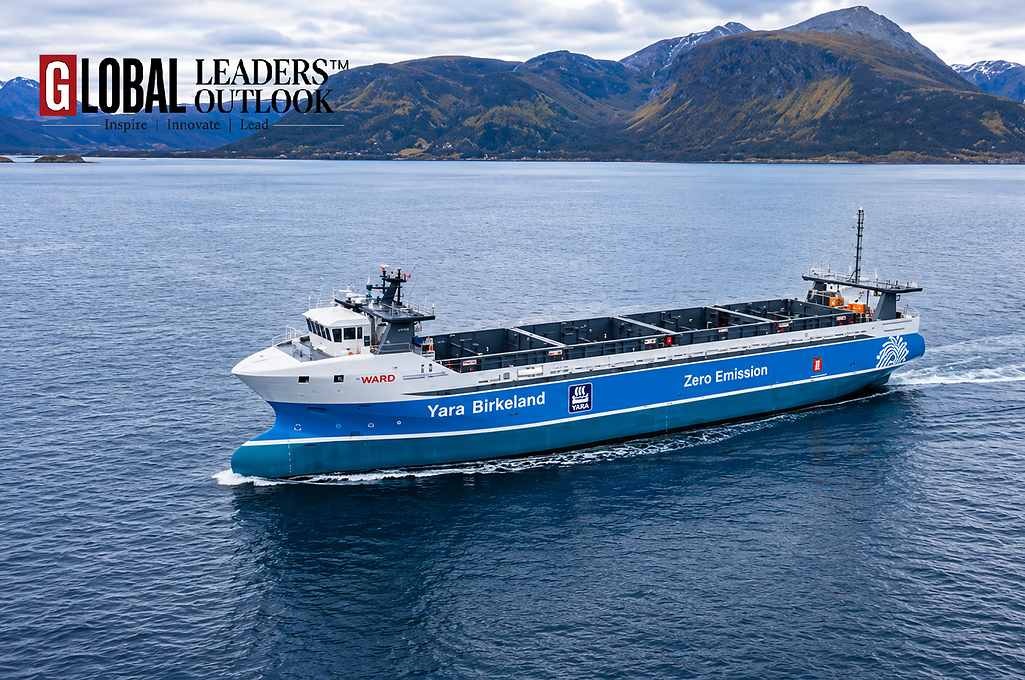
The IMO’s new code allows remote command of uncrewed cargo ships through certified shore centers, leaving shipowners to determine how much work can move off the vessel.
The International Maritime Organization’s first code for autonomous ships, which took effect on July 1, does not remove the human from a vessel’s chain of command. Instead, it allows that responsibility to move ashore under specific conditions. The voluntary code, adopted on May 21, makes a human master responsible for every covered cargo ship and lets that master work from a remote operations center only when nobody is aboard; where crew is aboard, the master should be on the ship.
The IMO says no internationally trading cargo ship covered by the Safety of Life at Sea convention yet runs commercially by autonomous or remote control, so owners must judge how many shipboard tasks they can safely hand to staff on land.
Regulation built for crewed ships
International maritime regulations were written for crewed ships, and the code’s preamble concedes that existing IMO instruments presume minimum manning on board. Yara and Kongsberg announced the container ship Yara Birkeland in 2017 with remote operation planned for 2019 and full autonomy from 2020, yet its first supervised autonomous voyage came only in March 2023, and in April 2024 Yara said mooring was still manual and no regulations covered such a ship.
Command split between master and center
The code instead applies function by function, covering navigation, berthing, cargo handling, or engine monitoring even when crew remains aboard. When a function moves ashore, the master stays responsible for the ship and must have the means to intervene, and the remote operations center should hold a certificate from the flag administration for each ship it operates.
The code does not settle liability, however, and it names no limit on how many ships one master may oversee, although a 2023 IMO working group said a master at a center may be responsible for several ships under conditions it left undefined.
Labor shortages drive the interest
Crew shortages give owners a reason to accept that uncertainty: Japan’s Nippon Foundation, which finances the MEGURI2040 autonomous-ship program, says coastal shipping carries about 40% of the country’s domestic freight by ton-kilometers and faces aging crews and worker shortages.
If operators ashore can do work that once required a person on every ship, each vessel would need fewer seafarers, but that is the sponsor’s rationale rather than a measured result, and any saving depends on the unresolved supervision ratio.
Japan and Norway test the model
Japan’s program offers the closest test so far: all four of its second-stage vessels had passed government inspection as autonomous ships by March 27, and the foundation said commercial operation had begun, with at least three confirmed in service.
Two land-based fleet operation centers monitor engine areas remotely and plan routes for several vessels. These centers take on work traditionally performed by crews aboard the ships. However, the vessels operate on domestic coastal routes, and the foundation’s announcements do not specify how many crew members remain on each ship.
Norway is testing a different arrangement. In June 2024, DNV gave Kongsberg Maritime preliminary approval to transfer a chief engineer’s role to a shore center where one person would oversee systems on three vessels. The master and navigators would remain aboard during testing.
Capital decisions ahead of binding rules
Shipowners adopting remote operations must build or contract a shore center and secure certification for each vessel it operates. That creates a long-term investment decision at a time when the regulatory framework is still developing.
A vessel ordered today could remain in service into the 2050s, while a mandatory version of the IMO code is not expected before January 2032 at the earliest. Owners must decide whether to incorporate remote-operation capabilities into new ships before the final requirements are known.
Cyber and positioning risk
Moving command ashore makes safe operation depend on the link between ship and shore, because remote operators see a vessel only through its sensors, communications and satellite positioning. The code calls for cybersecurity measures and a fallback state if a center’s security is compromised, yet the Strait of Hormuz shows how fragile positioning data can be: from March 5, Pole Star Global tracked 3,396 vessels there and flagged 231 with patterns consistent with GPS or AIS interference, including one ship that apparently falsified its own position. A separate non-mandatory IMO cyber code remains a roadmap until its working group meets in 2027.
The code, therefore, answers who runs a ship that navigates itself: a human master, who may sit in a certified center ashore only when nobody is aboard. Whether owners gain depends on whether shore centers can carry that responsibility in practice, and the IMO’s December meeting is set to continue building the framework for gathering the operating experience that will decide it.