Capital is moving faster than grid connections. Across Asia, governments are introducing rules that determine which data center projects get the electricity they need to proceed.
Malaysia is raising the bar for data center development, signaling that financial capacity and land access must be matched by a project’s ability to meet the country’s infrastructure and resource constraints. Investment, Trade and Industry Minister Johari Abdul Ghani told Parliament on Oct. 28 that states without sufficient water supply will not host new facilities, even where sites are available, and that applications will be judged on electricity availability and investors’ financial strength as well.
Asia’s data center pipeline outruns its power supply
Asia-Pacific’s data center pipeline reached a record 26.5 gigawatts in the first half of 2026, Cushman & Wakefield found, yet only 4.8 gigawatts were under construction. The other 21.7 gigawatts were still intended.
A developer needs land, chips, a tenant, cooling water, a long-term power contract and a grid connection. Most can be secured through commercial agreements. The grid connection, however, depends on utilities building the necessary infrastructure. Goldman Sachs Research says resolving grid problems typically takes years to decades.
Even headline figures on available power can be misleading. BMI Country Risk and Industry Research estimates Johor’s grid is only about 30% utilized overall, yet demand piles into a few locations where substations are increasingly strained, so spare power elsewhere does little for a campus that cannot connect there.
Artificial intelligence compounds the delay because many legacy facilities were not designed for modern workloads, CBRE notes. Scarcity shows in pricing: Singapore, with tightly controlled new supply and 2% vacancy, has the highest asking rents among major Asia-Pacific markets, averaging $403 per kilowatt per month.
How Asian governments ration capacity
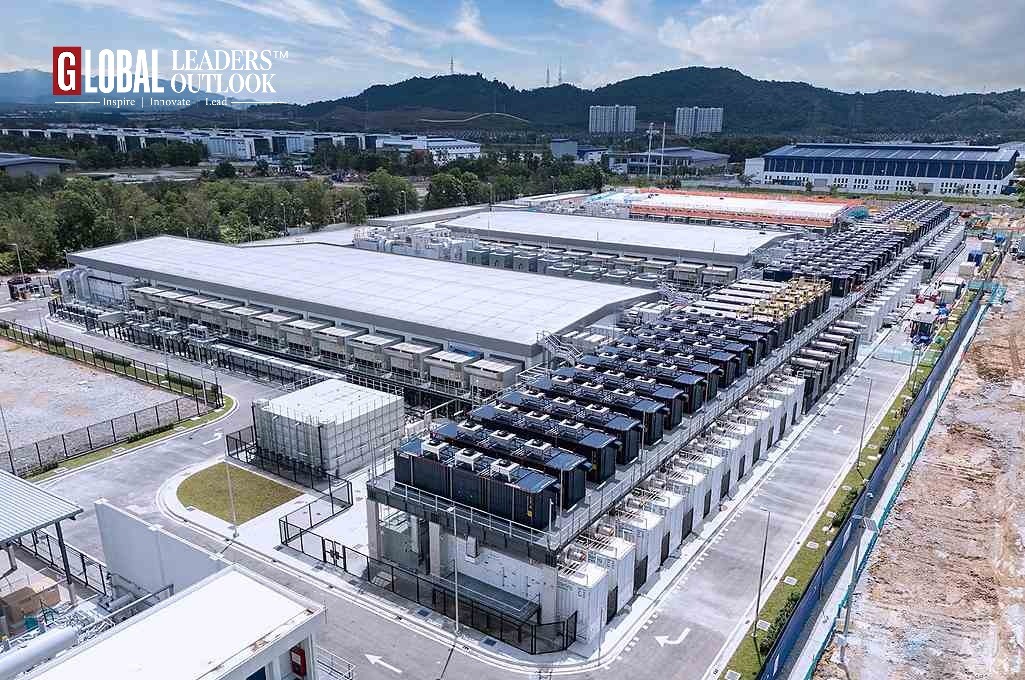
CBRE identifies neighboring Johor as an alternative offering scalable land and near-term power beside Singapore, and Cushman & Wakefield found its under-construction capacity nearly doubled to 602 megawatts in the first half. In BMI’s base case, new Johor capacity could need about 30 terawatt-hours of electricity a year by 2031, or 18% of Peninsular Malaysia’s supply, against 6% in 2026.
Kuala Lumpur’s response is to make operators carry the cost of the capacity they reserve. Data centers on Tenaga Nasional’s supply will pay unsubsidized market rates and must pay for the full capacity they contract, even if they use less: an operator contracting 300 megawatts but using 100 still pays for 300.
Japan faces the same scarcity but tries to move demand toward power instead of rationing it by price. CBRE reports that power limits new supply in Greater Tokyo, and two ministries formed a public-private council on Watt-Bit Collaboration in March 2025 to coordinate power and telecommunications networks. Demonstration projects selected in July will test whether workloads can shift between sites, so the strategy remains in pilot.
China tests whether the same logic holds where electricity is less scarce. Goldman Sachs Research says data centers use only about 2% of national electricity and that domestic chip production is the nearer-term constraint. The state nonetheless decides where capacity goes: its East Data, West Computing strategy concentrates facilities in western regions rich in green power, and window guidance on new approvals is meant to align supply with national hubs. The scarce input differs, but in both cases government decisions, not market demand alone, determine which projects proceed.
Who gains as power grows scarce
For operators and their customers, a project should now be judged by whether it holds a grid connection and a power contract, not by the gigawatts its sponsor announces. BMI’s analysis of four hubs found that projects with confirmed connections, committed tenants and financing are likelier to proceed on schedule, so much of the announced pipeline may arrive late. Where regulators charge for contracted capacity, as Malaysia now does, building ahead of demand carries a fixed cost, since unused power earns no revenue.
Goldman Sachs reports that operators and hyperscalers increasingly invest directly in generation, and BMI notes that Equinix’s 504-megawatt Sydney campus includes its own substation. In Johor, YTL expects 300 megawatts of its planned 1.2-gigawatt campus to be running by early 2027. Hybrid air and liquid cooling, which Goldman says Southeast Asian operators are adopting to serve both AI and conventional tenants, and modular construction, which Cushman & Wakefield says shortens deployment.
Outside China, the evidence points to a build-out limited less by appetite or capital than by how quickly electricity can be delivered and by the rules that decide who receives it. Malaysia’s Oct. 28 announcement illustrates the principle: in a region where planned capacity outweighs capacity under construction by more than four to one, the projects that secure power on a government’s terms are the likeliest to proceed.