Ibex investors led the seed round, bringing Ubitium's total seed funding to $18 million. The company plans to deliver evaluation units in 2027.
Ubitium, a semiconductor startup based in Düsseldorf, Germany, has raised $14 million in seed funding to develop a single processor for robots, drones and other autonomous machines.
Ibex Investors led the round. OpenOcean and existing investors KBC Focus Fund, Runa Capital and Inflection also participated, as did Florian Seibel, co-founder and co-CEO of European defense technology company Quantum Systems, who invested personally. The funding brings Ubitium’s total seed funding to $18 million.
Hyun Shin Cho, chief executive of Ubitium, said the funding will help turn the processor into a commercial product.
Design puts sensing, AI and control on one array
Autonomous machines must perceive their surroundings, run AI models and act on the results at the same time, according to Ubitium. Developers now split that work among a digital signal processor for sensing, a neural processing unit for AI and a central processing unit for control, a setup that adds data transfers, coordination and engineering complexity.
The company's architecture combines programmable processing elements in a single array, allocating resources to signal processing, AI and real-time control while the machine operates. It said the architecture uses unified memory and standard development tools for RISC-V, an open standard for processor instruction sets, and that using fewer chips would simplify software development.
First chip built on Samsung's 8-nanometer process
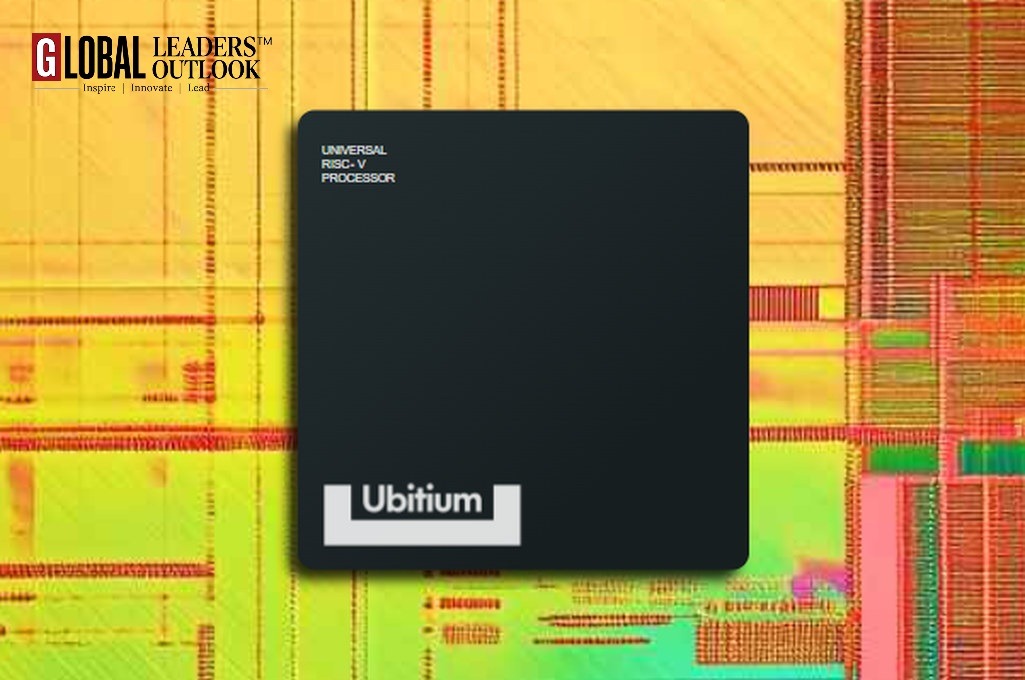
The UB108, the company's first chip, has 256 processing elements. The company completed tape-out, the final design handoff to manufacturing, in December 2025 and announced it on March 9, 2026.
Samsung Electronics Co. Ltd. (KRX: 005930) manufactured the chip using its foundry unit's 8-nanometer process, and Ubitium listed a first-silicon milestone, meaning the first manufactured chips, on its website on July 16, 2026.
Ubitium said the chip runs Linux and a real-time operating system simultaneously and has executed signal processing, AI inference and real-time control on the same array.
Investors cite onboard limits and chip progress
Seibel said an autonomous machine must process its surroundings, make decisions and control itself onboard, within power and weight limits, when communications are unavailable. He said combining chips not designed to work together costs weight, power and integration time, and cited that as his reason for investing.
Jeffrey Peters, a partner at Ibex Investors, said Ubitium’s architecture could let developers deploy new AI advances on one chip with one set of development tools.
Rudi Severijns, investment director at KBC Focus Fund, said first silicon within a year moved the processor from an early bet to proof.
General-purpose robotics market estimated $370 billion by 2040
Physical AI, as Ubitium defines it, is artificial intelligence built into machines that do physical work, such as drones, robots, vehicles and industrial equipment.
McKinsey & Co. estimates the general-purpose robotics market could grow from less than $1 billion in 2025 to about $370 billion by 2040. The projection provides a broader market backdrop for Ubitium’s target applications, but does not establish demand for its processor specifically.
Startup founded in 2024 holds 17 granted patents
Cho and Martin Vorbach, chief technology officer, founded the company in 2024. Runa Capital, Inflection and KBC Focus Fund co-led a $3.7 million seed round that the company announced Nov. 21, 2024.
Ubitium said it holds 17 granted patents covering its core technology, with more pending.
Commercial processor planned for 2027
Ubitium said its initial customers are building radar and audio systems, but it has not named them publicly. The company is also targeting drones and other autonomous systems that need integrated sensing, AI processing, and control.
It plans to tape out the UB410, its first commercial processor planned to have 4,096 processing elements, and deliver evaluation units in 2027.
.jpeg)