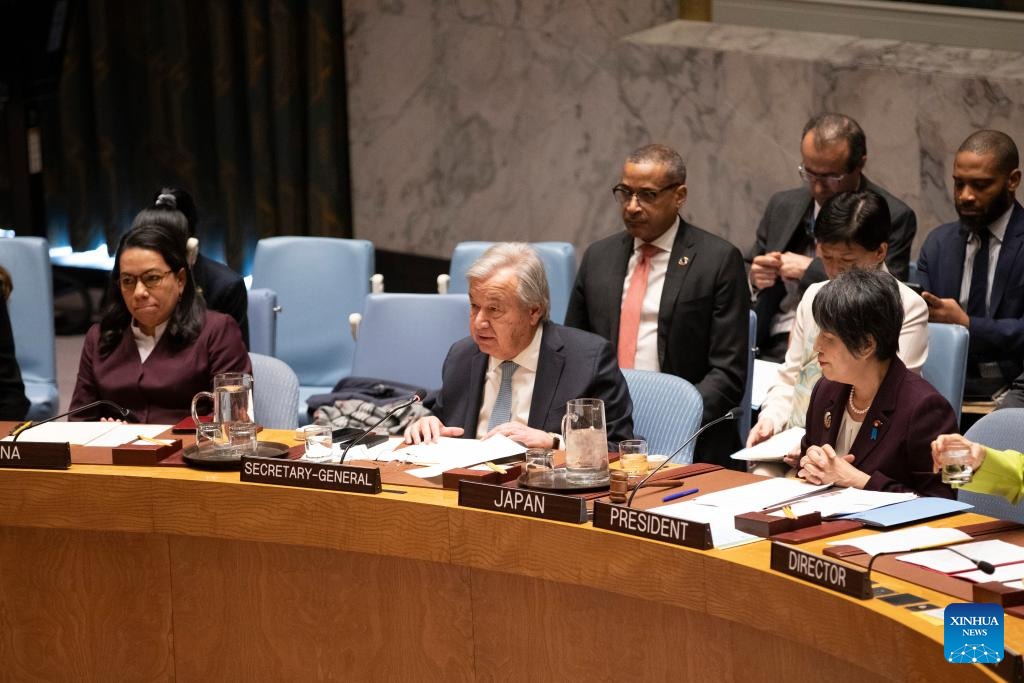
The high-level meeting comes after the expiration of New START and an unsuccessful 2026 review conference of the Nuclear Non-Proliferation Treaty.
The U.N. General Assembly is meeting this Tuesday to mark the International Day for the Total Elimination of nuclear weapons as the global arms-control framework faces renewed pressure following the expiration of the New START treaty and another failure to reach consensus at the Nuclear Non-Proliferation Treaty review conference. U.N. Secretary-General António Guterres said in a Sept. 26 message that the threat of nuclear catastrophe is “immediate and growing.”
Guterres called on nuclear-armed states to advance their commitments to nuclear disarmament and work toward the total elimination of nuclear weapons.
Assembly President Khalilur Rahman will convene the meeting in two sessions, from 10 a.m. to 1 p.m. and from 3 to 6 p.m., in the Trusteeship Council Chamber. The program lists statements by member states, observers and civil society representatives.
Guterres outlines nuclear risks
Guterres cited rising tensions, deepening mistrust, expanding military competition and the continued modernization of nuclear arsenals as dangers to the common future. He said recent multilateral efforts have fallen short of advancing nuclear disarmament and reinforcing non-proliferation commitments. He also said nuclear weapons do not provide lasting security.
Arsenals and disarmament talks
Citing global nuclear-arms estimates, the U.N. estimates that about 12,187 nuclear weapons remain. It says no formal nuclear disarmament negotiations are currently underway. Frustration has also grown among member states over what they regard as the slow pace of progress.
Many countries that possess nuclear weapons have long-term programs to modernize their arsenals. The global nuclear arsenal is far smaller than at the height of the Cold War, but the decline in total inventories has not eliminated modernization or the deployment of new systems.
The U.N. says more than half the world's population lives in countries that either possess nuclear weapons or are part of nuclear alliances.
Arms control after new START
New START, the arms control treaty between the United States and Russia, expired Feb. 5, with no successor agreement in place. The two countries signed the treaty in 2010. The treaty allowed a single five-year extension, which the two countries agreed to in 2021.
Thomas DiNanno, the U.S. undersecretary of state for arms control and international security, told the Conference on Disarmament in Geneva on Feb. 6 that the treaty's limits on warheads and launchers are no longer relevant in the current security environment. The treaty did not cover tactical or theatre-range nuclear weapons or China's nuclear arsenal, he stated.
He said China's nuclear arsenal has no comparable limits, transparency measures or controls.
DiNanno said the United States would complete its ongoing nuclear modernization programs and maintain nondeployed capacity that could be used if directed by the president. He called for a new framework for arms control and said President Donald Trump wants to find a better agreement.
Shen Jian, China's ambassador for disarmament affairs, said in response that Beijing is not prepared to join nuclear disarmament negotiations at this stage.
Non-proliferation treaty review
The 11th review conference of the Treaty on the Non-Proliferation of Nuclear Weapons began April 27 and ended May 22 in New York, without a consensus document. Delegates did not bridge their differences after four weeks of meetings and negotiations. It was the third consecutive review conference to fail to reach consensus on a substantive outcome document, following similar failures in 2015 and 2022.
Conference President Do Hung Viet of Vietnam said he had put forward four versions of a draft outcome document. The treaty aims to prevent the spread of nuclear weapons, advance nuclear disarmament and promote the peaceful use of nuclear energy.
The meeting comes ahead of the first review conference of the Treaty on the Prohibition of Nuclear Weapons, scheduled for Nov. 30-Dec. 4 in New York, giving governments another forum to debate nuclear disarmament later this year.
.jpeg)