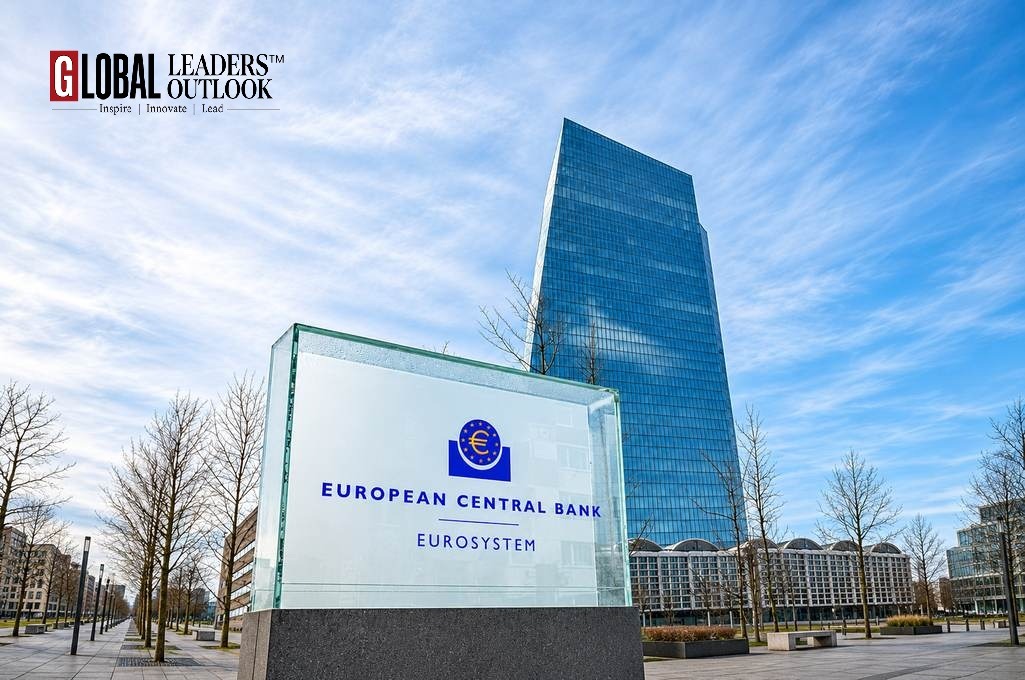
The November 202 Financial Stability Review identifies AI valuations, government borrowing and geopolitical tensions as key threats, with vulnerabilities particularly pronounced among non-bank financial institutions.
The European Central Bank (ECB) said risks to euro area financial stability remain elevated, citing high AI-related valuations, rising government borrowing requirements and geopolitical tensions. In its November 2026 Financial Stability Review, the central bank warned that a correction in technology markets or a sudden repricing of government bonds could expose financial institutions to losses.
ECB Vice President Boris Vujčić said banks are “well placed to withstand shocks,” while vulnerabilities are more pronounced in certain non-banks, where macroprudential safeguards are less developed.
AI financing raises market concerns
Free cash flow turned negative in 2026 for most U.S. hyperscalers, the large cloud and AI infrastructure providers, as AI spending exceeded operating cash flow. The ECB said it is expected to stay negative until 2028. Debt issuance for AI infrastructure has reached record highs this year, and the ECB’s data includes Microsoft Corp. (NASDAQ: MSFT), Meta Platforms Inc. (NASDAQ: META), Alphabet Inc. (NASDAQ: GOOGL), Amazon.com Inc. (NASDAQ: AMZN) and Oracle Corp. (NYSE: ORCL).
Financing concerns or competition from cheaper AI models could challenge those earnings expectations, according to ECB. As firms fund more AI infrastructure with debt, a shift in sentiment could spread losses from equity to bond markets. The review cites a forecast of about $5.5 trillion in cumulative capital spending by U.S. big tech firms through 2030, though estimates vary widely.
A surge in initial public offerings tied to AI investment is on track to surpass the dot-com peak as a share of U.S. GDP. The ECB stated such trends have often coincided with market peaks.
Governments face higher borrowing costs
Euro area government debt issuance in 2026 is at its highest level since the pandemic, driven mainly by Germany’s defense and infrastructure package. Longer-maturity yields have reached their highest levels in over two decades in several markets. Many euro area countries face their highest financing costs since the 2012 sovereign debt crisis, and the spread between French and German 10-year yields has widened significantly.
Governments have shifted issuance toward shorter maturities, and a quarter of outstanding euro area debt matures before the end of 2028. Hedge funds and foreign investors account for a growing share of the investor base as the Eurosystem reduces its presence in sovereign bond markets. The ECB warned that leveraged hedge funds trading could amplify a sudden repricing of government debt.
Non-banks carry concentrated AI and leverage risk
U.S. technology and AI-related firms account for between 16% and 26% of euro area non-banks’ equity investments. Non-banks have also started buying debt issued by AI-related firms, particularly U.S. hyperscalers. U.S. hedge fund Situational Awareness nearly collapsed in July 2026, which the ECB cited as an example of concentrated exposure meeting leverage.
Around half of the largest euro area high-yield bond funds hold too little high-quality liquid assets to cover outflows from a redemption shock. U.S. hedge funds have more than doubled their repo borrowing since 2023, and hedge fund borrowing has also risen in the euro-denominated repo market.
Bank loan quality and profits stay strong
The aggregate non-performing loan ratio of euro area significant institutions was 2.2% in the second quarter of 2026, a record low. Banks’ return on equity reached its highest level in a decade. The ECB attributed its resilience to strong profits and to capital and liquidity ratios well above regulatory requirements.
On the ECB’s broader estimate, direct AI lending by euro area banks totals about €75 billion, or 1.1% of their total committed corporate exposures. Closer links with non-banks could spread and amplify shocks, the ECB said. Banks rank cyber risk as the largest driver of operational risk, and AI is making attacks faster and cheaper, according to the review.
Middle East war strains energy markets
The effective closure of the Strait of Hormuz to commercial traffic since March has hit around 20% of global oil supply, according to the review. Euro area quarterly GDP growth was 0.4% in the third quarter despite the energy shock, trade frictions and extreme weather.
Strategic oil reserve releases have helped stabilize energy markets, but the ECB warned that this support could diminish. It said the financial stability effects of the Middle East conflict may become more pronounced during 2027.
The ECB called for maintaining releasable bank capital buffers and introducing measures to address leverage, liquidity mismatches and crowded positions among non-bank institutions. It also called for better cross-border data on offshore hedge funds and faster progress on the EU's savings and investments union.