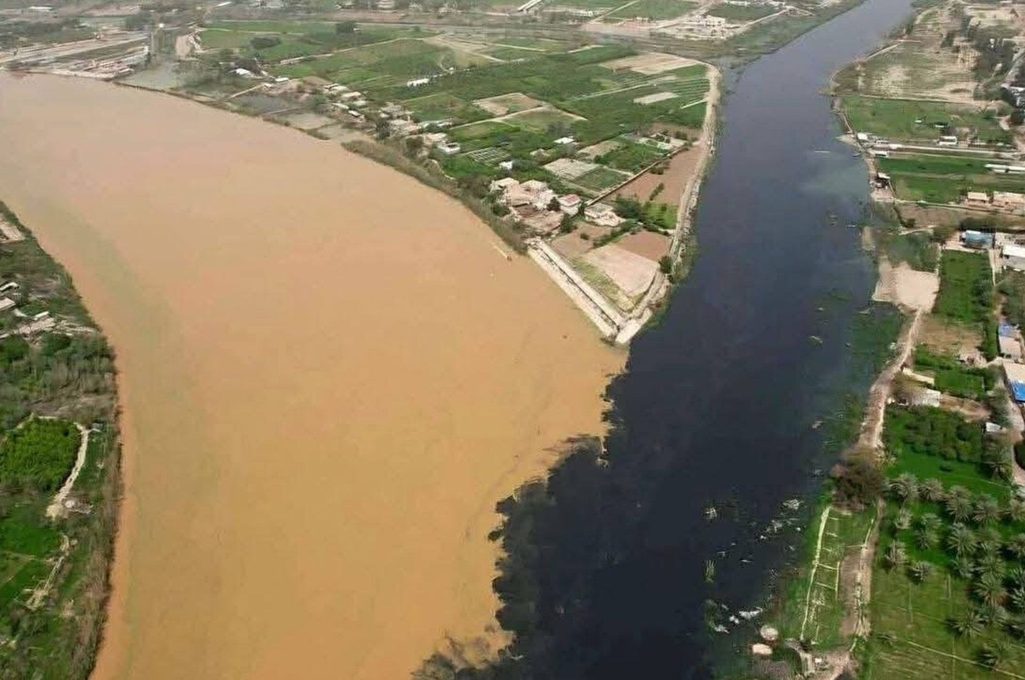
The committee's chairman linked dozens of pollution problems to illnesses including cancer and kidney failure.
Iraq's parliament on Thursday approved recommendations from a parliamentary committee investigating pollution in the Tigris and Euphrates rivers, according to Shafaq News. Committee Chairman Youssef al-Kalabi called for a water emergency on both rivers following the vote, saying the scale of contamination warrants urgent action.
Committee Chairman said the investigation identified dozens of pollution problems and associated them with serious health concerns, including cancer and kidney failure, claims that would require independent medical assessment
Ministries given one-year deadline
Environment Minister Srwa Abdulwahid said ministries and state institutions have up to one year to complete projects aimed at controlling river pollution. The Environment Ministry also plans to install monitoring stations along the Tigris and Euphrates to track water quality more closely.
Abdulwahid called for the maximum legal penalties to be imposed on those found responsible for polluting the rivers. The ministry is now waiting for other government agencies to submit formal timetables outlining how and when they plan to complete the required work.
Water Resources Minister Muthanna al-Tamimi said the effects are particularly serious in southern provinces, where river pollution has become a persistent concern. He also said the government is responsible for compensating people affected by the contamination.
Baghdad moves on World Bank-funded river project
The Council of Ministers has authorized Baghdad's mayor to negotiate and sign a World Bank grant for a "Healthy Rivers" project aimed at reducing pollution in Iraq's waterways, according to 964 Media.
The Environment Ministry has also called for sewage treatment plants to be established in every city. According to the ministry, such facilities could treat and recover more than 2 billion cubic meters of wastewater each year.
The measures would expand the government's response beyond monitoring and enforcement to wastewater treatment infrastructure and longer-term water-quality tracking. Whether those plans translate into completed infrastructure, however, will depend largely on the timelines now being sought from government agencies.
Parliamentary inquiry finds dozens of pollution sources
The parliamentary committee said Wednesday that its investigation had identified dozens of pollution problems across the river system. Al-Kalabi said the issues were associated with illnesses such as cancer and kidney failure, though the broader health impact of river contamination remains a matter for medical and environmental authorities to assess.
The inquiry began after a flood wave carried accumulated sediment from the Diyala River into the Tigris. It was later expanded to cover pollution affecting both the Tigris and Euphrates.
The Iraq Green Observatory, an independent monitoring group, has identified about 500 permanent pollution sources affecting the Tigris. These include untreated sewage, industrial waste and medical waste.
In Anbar province, environmental authorities have taken legal action against facilities accused of releasing untreated wastewater into the Euphrates, highlighting the enforcement challenges facing the government.
Water reserves recover after a dry 2025
The Water Resources Ministry stated on Sept. 15 that Iraq's water reserves had risen above 31 billion cubic meters. Storage reached about 34 billion cubic meters in late July, nearly seven times the level recorded a year earlier.
World Weather Attribution has described 2025 as Iraq's driest year since 1933, putting additional pressure on the country's already strained water system.
The Environment Ministry said in April that authorities had contained pollution in the Diyala and Tigris rivers after sewage leaked from the Rustamiyah drains into the Diyala River.
UNICEF calls for urgent action
UNICEF said on Sept. 28 that it welcomed calls from parliament and the Environment Ministry for urgent national action on river pollution.
The agency stated many urban families were unable to rely on safe water in 2025. Christian Skoog, UNICEF's representative in Iraq, said polluted rivers can expose children to illness and malnutrition.
It also said it was ready to support the government in expanding wastewater collection, treatment and reuse, as well as improving water-quality monitoring.
Government awaits agency plans
The Environment Ministry has held several meetings with government agencies at the direction of Prime Minister Ali al-Zaidi, Abdulwahid said. The ministry is now waiting for those agencies to submit formal timetables for their pollution-control projects.
Al-Kalabi mentioned ministers would raise the issue of river pollution at the next cabinet meeting, keeping pressure on the government to turn the parliamentary recommendations into concrete measures.
.jpeg)