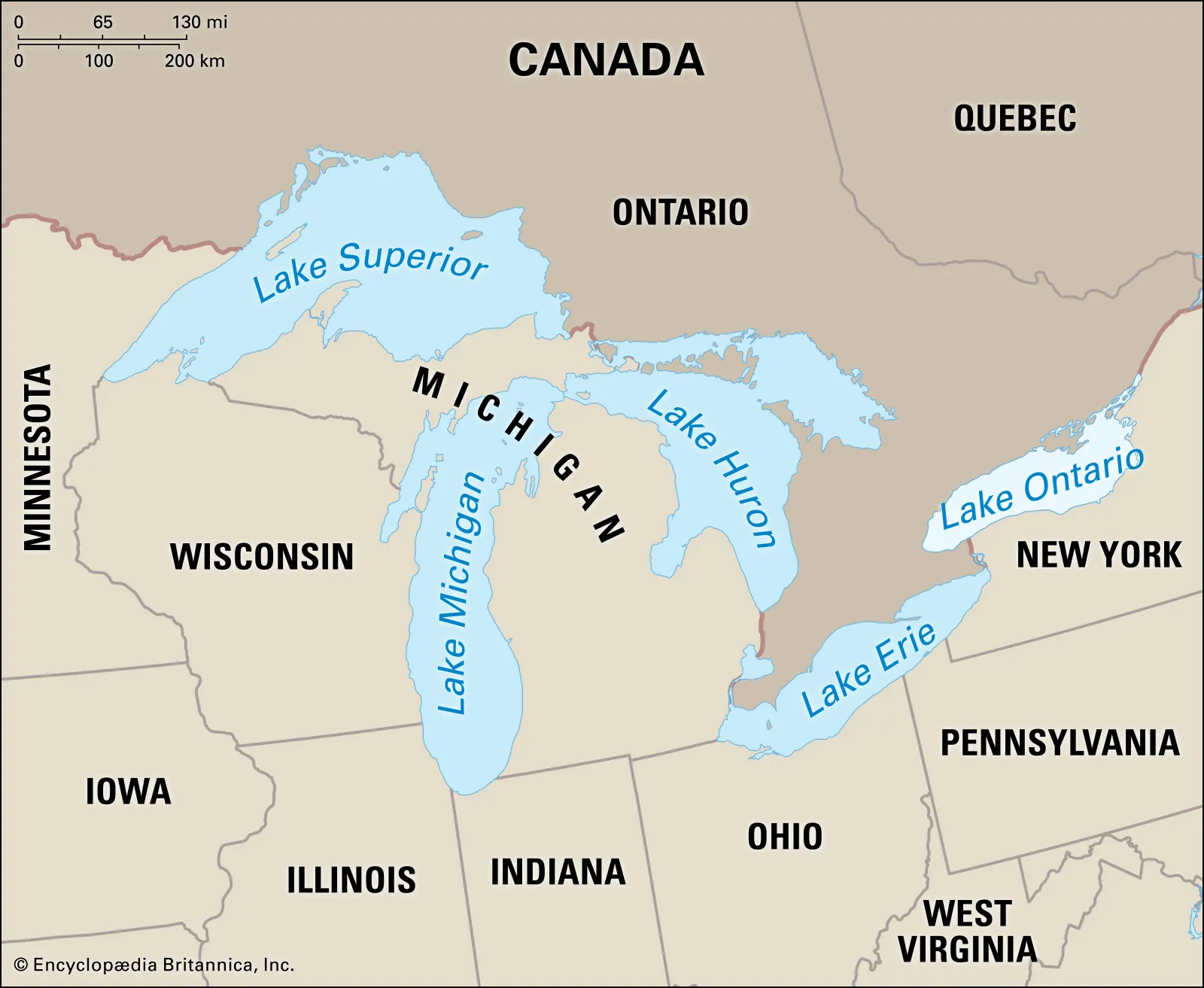
President Donald Trump has signed an executive order directing the U.S. government to rename Lake Ontario as “Lake America,”. This adds a geographic dispute to already strained relations between the United States and Canada.
The order describes the lake as a “tremendous asset to the United States” and part of the nation’s heritage. It directs federal agencies, including the U.S. Geological Survey, to use the new name in official records and electronic documents.
Lake Ontario is one of the five Great Lakes, along with Lake Superior, Lake Michigan, Lake Huron and Lake Erie. The lakes form a major freshwater system along the U.S.-Canada border and are important to communities, industries and ecosystems in both countries.
The National Oceanic and Atmospheric Administration says the Great Lakes contain about 20% of the world’s surface freshwater and provide drinking water for millions of people in the United States and Canada.
Why Trump Changed the Name
Trump’s executive order cites several reasons for the change, including U.S. investment in maintaining the Great Lakes and supporting commercial navigation.
The administration says the United States plays a significant role in maintaining shipping routes and infrastructure across the Great Lakes. The order also describes Lake Ontario as an important American asset in the country’s history of exploration, settlement, commerce and defense.
The renaming comes as trade relations between Washington and Ottawa have deteriorated. The United States has imposed tariffs on Canadian imports, while Canada has announced retaliatory measures. The dispute has also complicated broader trade negotiations between the two countries.
Canadian Prime Minister Mark Carney has rejected the renaming and emphasized the lake’s history. The name “Ontario” dates back more than 400 years and has Indigenous roots, including ties to the Wendat people.
Canada continues to officially refer to the body of water as Lake Ontario.
What the Name Change Means
The executive order changes how the lake is identified by the U.S. federal government. It does not require Canada, international organizations or private companies outside U.S. jurisdiction to adopt the new name.
Mapping services have responded differently based on users’ locations. Google Maps displays “Lake America” for users in the United States, while users in Canada continue to see “Lake Ontario.” In some other countries, both names may be displayed.
Geographic naming is not governed by a single global authority. Governments can establish official names for use by their own agencies, while other countries, international organizations and private companies may retain different names based on local practice and historical usage.
A Broader Pattern
The move follows Trump’s 2025 decision to rename the Gulf of Mexico as the “Gulf of America” for U.S. federal purposes.
That decision also generated international debate over whether the United States could change the name of a geographic feature whose traditional name is widely used outside the country.
The Lake America order comes at a particularly sensitive time in U.S.-Canada relations, with both governments negotiating tariffs and trade policies.
The U.S. government will use “Lake America” in its official documents and systems. Canada continues to use “Lake Ontario,” leaving the lake with different official names on opposite sides of the border.
.jpeg)